
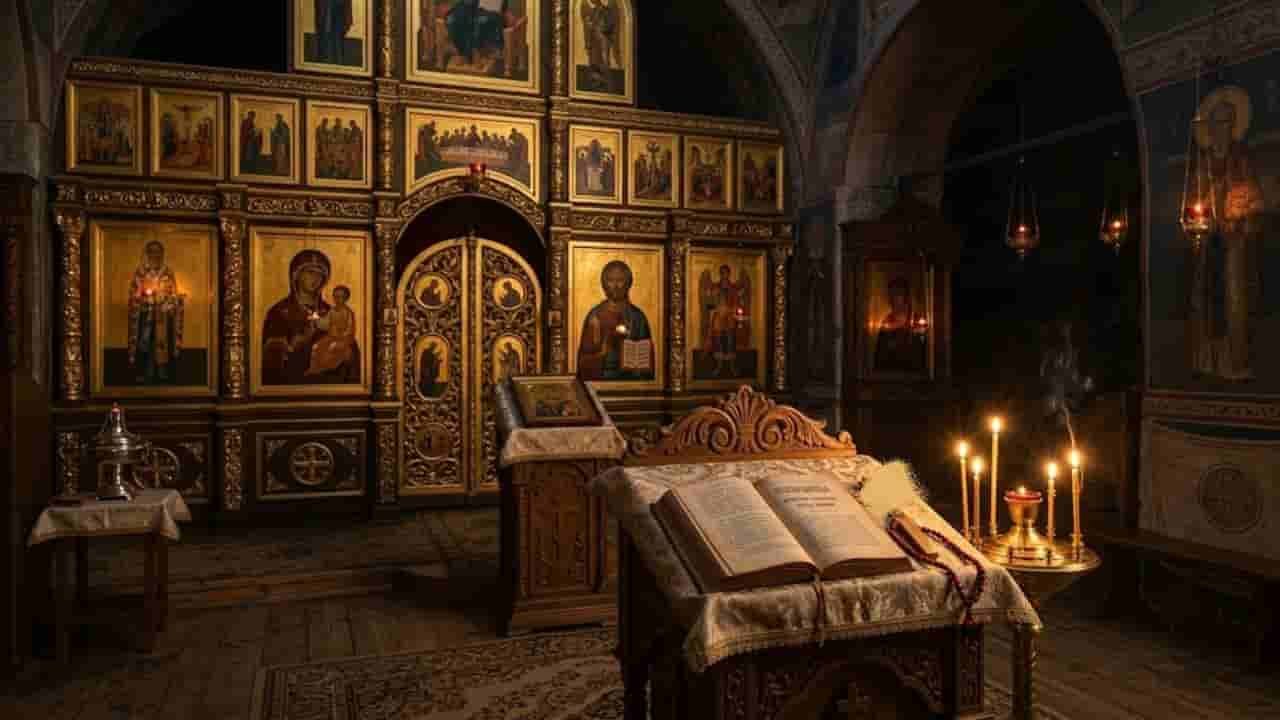
As the day comes to an end, it is easy to feel tired, distracted, or worried about everything that happened. You may want to spend a quiet moment with God but feel unsure which prayers to say or how to follow the Orthodox tradition. Evening prayers Orthodox Church practices offer a peaceful way to slow down, reflect on the day, and prepare your heart for restful sleep.
In this guide, you will discover traditional Orthodox evening prayers, their meanings, and how to include them in your nightly routine. These evening prayers Orthodox Church traditions can help you express gratitude, seek forgiveness, find comfort in God’s presence, and strengthen your faith before going to sleep. Whether you are new to Orthodox prayer or looking to deepen your spiritual life, you will find simple guidance to help you end each day with peace.
What Are Evening Prayers in the Orthodox Church?
Evening prayers are an important part of Orthodox Christian devotional life. They give believers time to thank God for the day’s blessings, acknowledge their mistakes, pray for loved ones, and prepare for the night with humility and faith.
Orthodox Christians may follow prayers from a traditional prayer book, a personal prayer rule, or guidance received from their priest. The exact order and length can vary by tradition and individual circumstances.
O God, as this day comes to its close, I turn my heart toward You.
Thank You for the blessings I noticed and the kindness I received.
Forgive the wrongs I have committed in thought, word, and action.
Help me learn from today’s mistakes and grow in patience.
Protect my family and everyone who needs Your comfort tonight.
Quiet my worries and guide me toward a more faithful tomorrow.
May I rest in Your mercy and awaken with a grateful heart. Amen.
The purpose of evening prayer is to build a sincere relationship with God through thanksgiving, repentance, reflection, and trust. It also gives you an opportunity to consider how your actions affected others and what you can do differently tomorrow.
Read More: 15 Powerful Prayers for Men for Strength, Wisdom, and Protection
Traditional Orthodox Evening Prayers Before Sleep
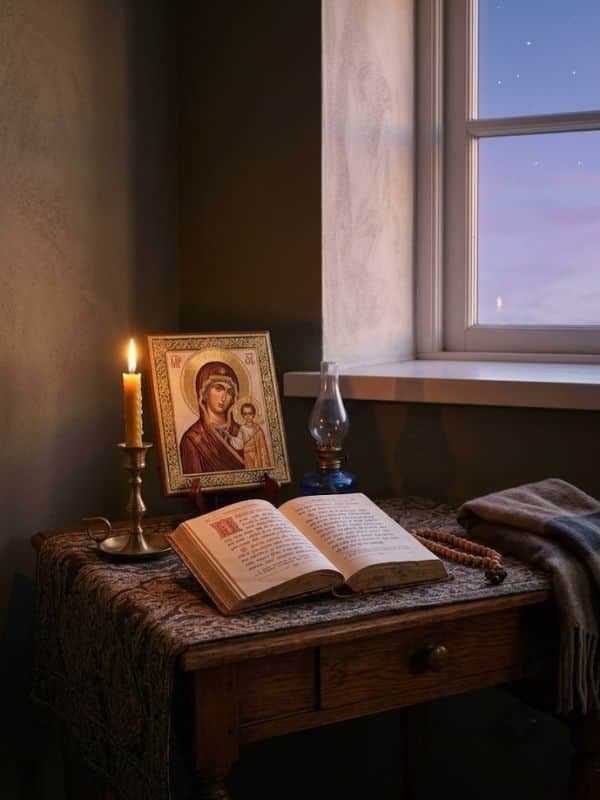
Traditional Orthodox prayers before sleep help believers bring the concerns of the day before God. Many Orthodox prayer books contain prayers of thanksgiving, confession, requests for protection, and prayers associated with the Theotokos and the Guardian Angel.
These evening prayers orthodox church traditions are often part of a daily prayer rule. Some people follow a longer sequence, while others begin with a few familiar prayers and gradually develop a consistent routine. If you are new to Orthodox Christianity, start with a manageable selection and ask your priest for guidance when needed.
Merciful God, I come before You at the end of this day.
Receive my gratitude for every good thing You have given me.
Cleanse my heart of anger, pride, envy, and resentment.
Help me forgive those who have hurt me and seek forgiveness from those I have wronged.
Watch over my home and keep my loved ones safe through the night.
Teach me to rest without fear and rise ready to serve others.
May my thoughts remain peaceful as I place this night in Your hands. Amen.
Orthodox bedtime prayers encourage believers to approach sleep with a peaceful conscience. Their value comes from praying attentively and sincerely rather than rushing through a fixed number of words. Following evening prayers Orthodox Church traditions can also help you become more familiar with the prayers passed down through generations of Orthodox Christians.
The Orthodox Church’s Evening Prayer Rule

An Orthodox Christian prayer rule is a regular pattern of prayer that helps a person maintain a steady spiritual life. It may include traditional opening prayers, Scripture readings, prayers of repentance, intercessions, and closing prayers.
The evening prayer rule differs according to personal circumstances, spiritual maturity, and local church customs. A priest or spiritual guide can help someone choose a suitable routine without taking on more than they can reasonably maintain.
O God, guide me as I establish a faithful habit of evening prayer.
Give me the patience to pray with attention rather than hurry.
Help me understand the words I speak and live according to their meaning.
Correct my habits when I become careless or distracted.
Keep me humble when prayer feels easy and faithful when it feels difficult.
Let my daily prayer rule lead me toward greater love and compassion.
May my life reflect the faith I bring before You each evening. Amen.
A prayer rule should support spiritual growth rather than become a burden or a measure of personal worth. Consistency, humility, and guidance are more helpful than choosing an unnecessarily demanding routine.
Read More: Prayer Bead Prayers: How to Pray with Beads Step by Step
Opening Prayers and the Trisagion Prayers
Many Orthodox prayer books begin evening prayers with introductory prayers and the Trisagion prayers. The Trisagion sequence includes the traditional invocation, “Holy God, Holy Mighty, Holy Immortal, have mercy on us,” repeated three times. It prepares the believer to approach the rest of the prayer rule with reverence.
Depending on the prayer book, the opening sequence for evening prayers orthodox church traditions may also include the Lord’s Prayer and other established prayers. Follow the order in your own Orthodox prayer book when possible, since wording and arrangement can differ among editions. These opening prayers establish a quiet, attentive beginning for your evening devotion.
Prayers of Repentance and Confession Before God

Repentance is central to Orthodox spiritual life. In evening prayer, believers reflect on their actions, recognize where they have failed to show patience or love, and ask God for mercy and help to change. This examination of conscience should encourage honest reflection rather than hopelessness or excessive self-blame.
Psalm 50 in the Septuagint numbering, corresponding to Psalm 51 in many Western Bibles, is traditionally associated with repentance. Reading it slowly can help you express sorrow for wrongdoing and ask for a renewed heart. When serious or recurring sins trouble you, speak with your priest about confession and appropriate spiritual guidance.
For believers following evening prayers Orthodox Church traditions, repentance is not simply about remembering mistakes. It also involves seeking forgiveness, making amends when possible, and choosing a more loving response in the future.
Prayers to the Theotokos and Guardian Angel
Orthodox Christians may include prayers to the Theotokos, meaning the Mother of God, and to their Guardian Angel in their evening prayer rule. These prayers ask for intercession, spiritual help, and protection while keeping worship directed toward God. Their presence in a prayer book reflects the Orthodox understanding of the communion of saints and the place of intercessory prayer.
The wording of these prayers varies among Orthodox traditions and prayer books. If you are unsure which version to use, follow a trusted Orthodox resource or ask your priest. The goal is to pray with faith and understanding rather than treat a particular formula as a guarantee that nothing difficult will happen.
Closing Prayers and the Sign of the Cross
Closing prayers bring the evening rule to a peaceful conclusion. They may include a final request for mercy, prayers for family members, an appeal for protection during sleep, and the sign of the cross according to Orthodox practice. These actions help mark the transition from daily responsibilities to rest.
Take a moment to consider the people you encountered during the day. If a conversation went badly, ask God for the humility to make things right. If someone is struggling, remember that person in prayer. End without rushing, allowing the words to guide your thoughts toward forgiveness, gratitude, and hope.
Orthodox Prayers for Peace, Protection, and Forgiveness at Night

The end of the day is a good time to bring your worries, regrets, and hopes before God. Orthodox prayers for peace and protection remind believers to seek mercy, forgive others, and entrust their lives to God’s care. You can also pray for family members, friends, people who are ill, and anyone facing loneliness or hardship.
These evening prayers Orthodox Church traditions emphasize trust and repentance rather than fear. Prayer does not promise that every problem will disappear overnight, but it can help you face uncertainty with greater patience and spiritual peace.
O God of mercy, hear me as I prepare to rest tonight.
Protect me and my loved ones from danger and despair.
Forgive my careless words and the unkind thoughts I have allowed to grow.
Help me release resentment and treat others with compassion.
Bring comfort to those who are sick, lonely, or afraid.
Give strength to everyone facing a difficult decision or painful season.
Keep my heart steady in faith and teach me to trust Your wisdom. Amen.
You can make this prayer more personal by mentioning specific people and situations. If a family member is unwell, ask God to comfort that person and give wisdom to those providing care. If you are worried about work or finances, pray for patience, practical judgment, and the strength to take responsible steps.
Prayers for Peace of Mind Before Sleep
A troubled mind can make it difficult to settle down at night. You may replay conversations, worry about tomorrow, or regret something you said. Orthodox Christian prayers for rest offer a quiet opportunity to acknowledge those feelings without allowing them to control your thoughts.
O God, calm the thoughts that keep me from resting.
Help me release the worries I cannot resolve tonight.
Give me wisdom to address tomorrow’s responsibilities when morning comes.
Teach me to forgive myself for honest mistakes and learn from them.
Replace my impatience with gentleness and my fear with trust.
Let Your peace guide my heart through the quiet hours.
May I wake with renewed strength to face the day ahead. Amen.
After praying, take a few moments to sit quietly. You do not need to force every thought away. Simply return your attention to the words of the prayer whenever your mind wanders. This gentle practice can make your nightly prayer routine feel less rushed and more meaningful.
Prayers for Family and Loved Ones at Night
Many believers include their family and friends in their nightly prayers. You can pray for children, parents, a spouse, elderly relatives, and people who live far away. This practice reminds you that love involves more than concern; it also involves patience, forgiveness, and practical care.
O God, watch over the people I hold dear.
Give my family health, wisdom, patience, and understanding.
Protect those travelling and comfort those who feel alone.
Help us speak kindly and resolve disagreements without bitterness.
Provide for those who lack food, shelter, or companionship.
Teach me to support my loved ones through both words and actions.
Keep our hearts united in love and gratitude. Amen.
You can say these prayers whether your family shares your faith or follows a different path. Pray sincerely for their well-being and remember that caring actions, honest conversations, and forgiveness are also important expressions of love.
The Role of Compline in Orthodox Evening Prayer

Compline is a liturgical service in the Eastern Orthodox tradition associated with the end of the day. Its name reflects the idea of completing the day’s cycle of prayer. It includes established prayers, psalms, hymns, and petitions that help the faithful prepare for the night with repentance and trust in God.
Compline is distinct from a personal evening prayer rule, although the two may share some prayers and themes. A person praying at home might use a prayer book, while a monastery or parish may observe the service according to its liturgical calendar and local custom.
O God, who guides the Church through every season, receive my prayer tonight.
Help me remember that each day is a gift entrusted to me.
Forgive the ways I have failed to love You and my neighbors.
Grant rest to those who have worked hard and comfort to those in sorrow.
Watch over the faithful who gather in prayer and those who pray alone.
Strengthen me to live tomorrow with greater humility and kindness.
May this night’s rest prepare me for a new day of faithful service. Amen.
Understanding Compline helps readers exploring evening prayers Orthodox Church traditions distinguish a personal devotional routine from a formal liturgical service. Both forms of prayer can encourage reflection, repentance, and trust, but Compline follows an established service structure.
Small Compline and Great Compline
Small Compline and Great Compline are two forms of the Compline service. Small Compline is generally shorter, while Great Compline contains a more extensive collection of prayers and hymns and is appointed for particular occasions in the liturgical calendar. Their use depends on the Church’s liturgical practice.
Great Compline is especially associated with certain periods and observances, including parts of Great Lent. Small Compline is used in other circumstances according to the liturgical calendar. Exact arrangements can vary, so consult an Orthodox service book or ask your parish priest if you want to understand which service is appointed for a particular evening.
How to Pray the Orthodox Evening Prayers at Home

You can begin praying at home with a quiet space, a trusted Orthodox prayer book, and a few uninterrupted minutes. Some people pray before an icon corner, while others begin wherever they can find a peaceful place. The important thing is to create an environment where you can focus.
If you are wondering how to pray evening prayers in the Orthodox Church, start with a simple routine that respects your tradition and current circumstances.
- Choose a regular time. Pray before bed or at another time when you can give your attention to God.
- Find a quiet place. Put away distractions where possible and allow yourself a few moments of stillness.
- Begin with traditional opening prayers. Follow a trusted Orthodox prayer book instead of assembling an unfamiliar sequence from random sources.
- Reflect on the day. Give thanks for blessings and consider where you need to repent, apologize, or make changes.
- Pray for others. Remember your family, friends, the sick, the suffering, and those in need.
- Finish with the appointed closing prayers. Make the sign of the cross according to your Orthodox tradition and end peacefully.
O God, help me create a quiet place for prayer in my daily life.
Teach me to set aside distractions and listen with an attentive heart.
Guide me as I learn the prayers handed down through the Church.
Give me patience when I struggle to concentrate.
Remind me to pray with sincerity instead of worrying about perfection.
Help me carry the lessons of prayer into my words and actions.
May my home become a place of gratitude, kindness, and peace. Amen.
A Simple Evening Routine for Beginners
If you are new to Orthodox prayer, begin with a short selection from an approved prayer book. You might start with the opening prayers, the God’s Prayer, a brief examination of conscience, and a prayer for protection during the night. Add other prayers gradually as you become familiar with their meaning.
A short routine can be easier to maintain than an extensive one that leaves you feeling overwhelmed. Ask your priest for help choosing prayers that fit your circumstances, especially if you wish to follow a more formal prayer rule.
Orthodox Evening Prayer Books and Trusted Church Resources

An Orthodox prayer book can help you follow a consistent order and learn traditional prayers in their proper context. Many editions include morning and evening prayers, psalms, prayers of repentance, petitions for family members, and prayers associated with the Theotokos and Guardian Angel.
O God, thank You for those who preserve and teach the prayers of the Church.
Guide me toward resources that deepen my understanding of the Orthodox faith.
Help me distinguish trustworthy instruction from careless or misleading information.
Give wisdom to priests, teachers, translators, and those who serve their communities.
Teach me to read with attention and pray with an open heart.
Let the words I learn encourage patience, repentance, and love.
May my study of prayer lead me closer to You and to faithful living. Amen.
If you are looking for evening prayers Orthodox Church resources, start with a prayer book recommended by your parish. Printed books can reduce screen distractions, while reliable digital editions are convenient when travelling.
A prayer book is a guide to prayer, not a substitute for participating in the life of the Church. Personal devotion and communal worship support one another in Orthodox Christianity.
Differences in Evening Prayer Traditions Among Orthodox Churches
The Orthodox Church includes several traditions with shared theological foundations and distinct liturgical customs. Greek, Russian, Antiochian, and other Eastern Orthodox communities may use different translations, prayer book arrangements, musical settings, or local practices. However, the central themes of evening prayer remain familiar: thanksgiving, repentance, intercession, and trust in God’s mercy.
The evening prayers Orthodox Church communities follow are not always identical in wording or order. Some prayer books include a fuller selection of prayers to the Theotokos and the Guardian Angel, while others arrange the opening and closing prayers differently. Liturgical services also follow the Church calendar, so the prayers appointed for one occasion may differ from those used on another.
O God, source of truth and unity, help me respect the traditions of Your Church.
Teach me to learn from others without judging their customs too quickly.
Preserve the faithful in love, humility, and devotion.
Guide every community toward compassion and a deeper understanding of Your teachings.
Help me remain faithful to my own Orthodox tradition while showing kindness to others.
Remove pride and misunderstanding from my heart.
May our prayers encourage peace, mutual respect, and love for all people. Amen.
If you attend an Orthodox parish, your priest can explain which prayer book and service practices are customary in your community. This is especially helpful if you have moved between jurisdictions or are learning about Orthodox Christianity for the first time.
Building a Consistent Orthodox Evening Prayer Routine
Developing a nightly prayer habit takes patience. Some evenings you may feel focused and peaceful, while others may bring tiredness, interruptions, or difficult emotions. A sustainable routine gives you room to remain faithful without turning prayer into another source of pressure.
O God, help me remain faithful in the small things I do each day.
Give me discipline without pride and patience without discouragement.
Remind me to offer thanks even when the day has been difficult.
Help me recognize my mistakes and make amends where I can.
Teach me to pray for others with genuine concern.
Renew my desire to grow in faith through ordinary daily choices.
Receive my prayers tonight and guide me toward a more loving tomorrow. Amen.
Here are a few ways to make your routine more manageable:
- Keep your prayer book ready: Choose a place where you can easily find it each evening.
- Begin with a reasonable length: Follow a short selection recommended by your priest rather than attempting an extensive rule immediately.
- Pray attentively: Read slowly enough to understand the meaning instead of rushing to finish.
- Remember your responsibilities: If you need to apologize, help someone, or correct a mistake, consider what action you can take tomorrow.
- Adjust with guidance: Work schedules, family responsibilities, and other circumstances may affect your routine. Ask your priest how to adapt your prayer rule appropriately.
The goal of Orthodox nightly prayers is not to achieve a perfect routine every evening. It is to keep returning to God with sincerity and allow prayer to shape your conduct during the day. Over time, evening prayers Orthodox Church traditions can help you approach rest with gratitude, humility, and renewed hope.
FAQs
What are the evening prayers of the Orthodox Church?
These traditional prayers express gratitude, repentance, and trust in God. Evening prayers Orthodox Church traditions help believers prepare for peaceful rest.
What prayers do Orthodox Christians say before bed?
They often say prayers of thanksgiving, repentance, and protection. Evening prayers Orthodox Church prayer books provide a traditional order to follow.
What is the Orthodox evening prayer rule?
It is a regular pattern of personal prayer. Evening prayers Orthodox Church traditions may include psalms, Scripture, and prayers for forgiveness.
What is the difference between Compline and evening prayers?
Compline is a formal liturgical service, while personal evening prayers are usually said at home. Both feature in evening prayers Orthodox Church traditions.
Can beginners follow the Orthodox evening prayer rule?
Yes, beginners can start with a short prayer book selection. Evening prayers Orthodox Church routines can grow gradually with guidance from a priest.
Conclusion
Ending the day with evening prayers Orthodox Church traditions can help you reflect on your actions, thank God for His blessings, and seek forgiveness for your mistakes. Whether you follow a traditional prayer book, learn about Compline, or begin with a few simple prayers at home, the important thing is to approach prayer with sincerity and humility. You do not need to know every prayer by heart before you begin.
Start with a manageable routine, remain patient as you learn, and seek guidance from your Orthodox priest when you have questions about your prayer rule. Over time, evening prayers Orthodox Church traditions can help you develop a more thoughtful and faithful approach to daily life. As you prepare for sleep, place your worries before God, remember those who need your prayers, and carry gratitude into the night.

PrayersGrace is a destination for heartfelt prayers, faith-filled messages, and inspirational words, managed by Olivia Bennett, an SEO content writer with 2 years of experience, focused on creating meaningful content that encourages, comforts, and uplifts readers.