
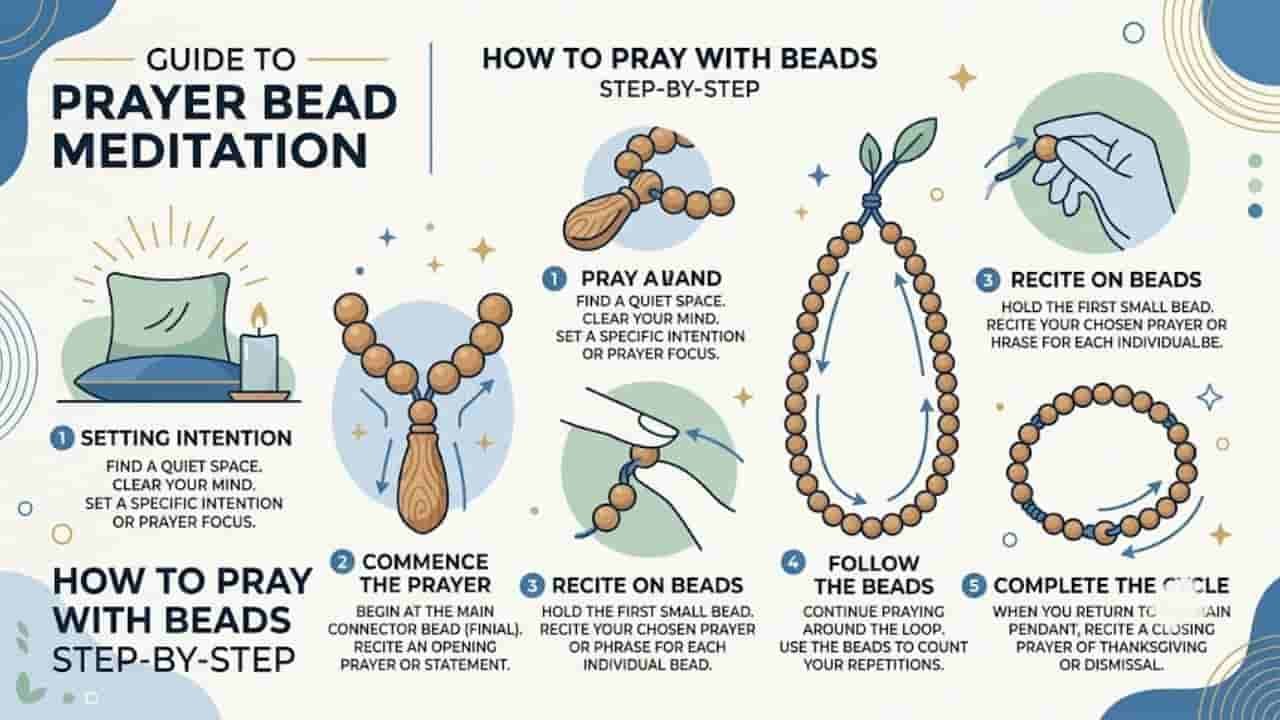
Have you ever sat down with a set of prayer beads, ready to find some peace, only to feel lost about what to actually say? I’ve been there too, holding the beads in my hands and wondering if I was doing it “right.” Searching for prayer bead prayers often comes from a simple wish: to feel calm and connected, without all the confusion.
In this post, I’ll walk you through easy, meaningful prayer bead prayers you can use no matter your background or experience. You’ll learn how each bead can guide your focus, plus simple tips to make your practice feel natural and personal. By the end, you’ll have a clear way to begin, and a quiet moment you can return to any time you need it.
What Are Prayer Bead Prayers?
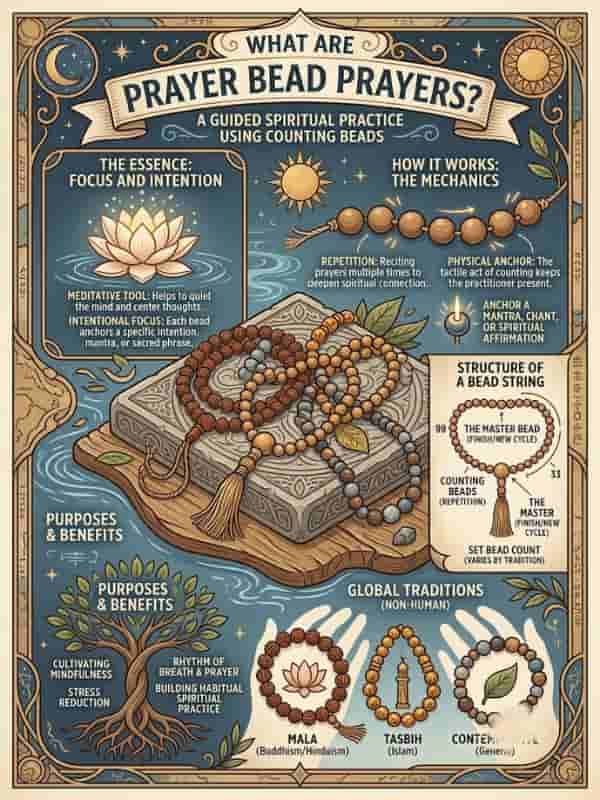
Prayer bead prayers are short, familiar prayers you say while moving through a strand of beads. Each bead gives your hands something to do, so your mind can settle. Christian prayer beads, sometimes called devotional beads, a prayer chaplet, or a prayer cord, have been part of worship for centuries.
The beads aren’t magic, and they aren’t jewelry with a holy label. They’re a simple devotional aid that helps you count, pause, and keep your attention on God. Treat them with respect, and they’ll serve you well.
God, I come with a quiet heart.
I don’t have any fancy words today.
Teach me to slow down and listen.
Let each bead remind me that you’re near.
Help me pray with honesty instead of hurry.
Open my heart to understand what I’m doing here.
Amen.
How to Pray with Prayer Beads Step by Step
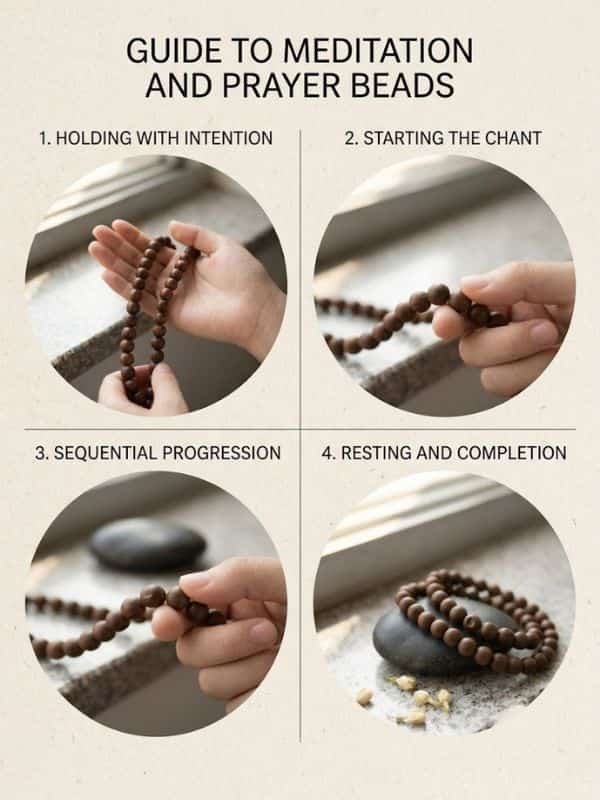
Learning how to pray with prayer beads is easier than most people expect. You don’t need special training, only a little patience and a willing heart. Here’s a simple pattern that works for prayer bead prayers of almost any tradition.
- Find a quiet spot. Sit comfortably and let your shoulders relax.
- Hold the beads gently. Rest the strand in your palm or between your thumb and finger.
- Set a personal intention. Decide what you’re bringing to God today, such as peace, thanks, or guidance.
- Begin with a short opening prayer. The Sign of the Cross or a single sentence of welcome works well.
- Pray one bead at a time. Move your fingers to the next bead as you finish each prayer.
- Count your prayers on the beads. Let the strand do the counting so you don’t have to.
- End with thanksgiving. Close with a few words of gratitude and sit in silence for a moment.
Read More: Rosary Ending Prayers: Traditional Prayers to Close the Rosary
Traditional Prayers Used with Prayer Beads
Many people start with traditional prayers because they’re already written and tested by generations of believers. The Sign of the Cross, the Apostles’ Creed, the God’s Prayer, and the Glory Be appear in many devotional practices. In fact, you’ll often find prayers of thanksgiving, petition, and repentance woven together in one sequence. Following a traditional prayer sequence also frees you from wondering what to say next.
Gracious God, thank you for the words I’ve inherited.
Believers before me prayed to them in joy and in sorrow.
Now I borrow their faith when mine feels small.
Help me understand what I’m saying and not just recite it.
Let old words become living words in my heart today.
Amen.
Opening Prayer and Intention
Start with an opening prayer that invites God into the next few minutes. It can be traditional, like the Sign of the Cross, or something you say in your own words. Then name your prayer intentions, whether that’s a worried friend, a hard week, or simple thankfulness. Choosing prayers that reflect your intentions keeps the whole session focused.
Repeated Prayers for Meditation
Repetition might sound dull at first. However, saying the same prayer again and again creates a steady rhythm that quiets a busy mind. This is meditative prayer at its simplest. Don’t rush the words, and don’t worry about counting perfectly, because the beads will keep track of you.
Closing Prayer
When you reach the end of the strand, finish with a closing prayer. Many people use a prayer of thanksgiving, while some Catholic traditions use the traditional closing prayer. Whatever you choose, pause afterward in silence for a breath or two. That small stillness often becomes the best part of the whole practice.
Catholic Rosary Prayers and Their Sequence

The Rosary is the best-known form of Catholic prayer beads, and it follows a clear order. It combines spoken prayers with reflection on moments from the life of Our Saviour. Once you see the pattern, the Rosary prayers feel much less complicated.
| Part of the beads | Prayer |
| Crucifix | Sign of the Cross and Apostles’ Creed |
| First large bead | The God’s Prayer |
| Three small beads | The Marian prayer, three times |
| Next large bead | Glory Be |
| Each decade, large bead | Announce the mystery, then the God’s Prayer |
| Each decade, ten small beads | The Marian prayer, ten times |
| End of each decade | Glory Be |
| Final step | The traditional closing prayer and Sign of the Cross |
God of mercy, as I move through each decade, slow my heart.
Let me walk beside you through joy, sorrow, and glory.
Keep my mind from drifting to my to-do list.
Show me something new in the story I already know.
Give me patience with every repeated word.
Send me back to my day steadier than I began.
Amen.
Read More: 15 Powerful Prayers for Cancer: Healing, Strength & Hope
Other Types of Christian Prayer Beads

The Rosary isn’t the only option. Christian prayer beads come in several forms, and each follows the customs of its own faith tradition. Many people exploring prayer bead prayers for the first time are surprised by how many styles exist.
| Type | Quick description |
| Anglican prayer beads | A 33-bead strand with four cruciform beads and seven weeks of smaller beads |
| Orthodox prayer rope | A knotted cord used for a short, repeated prayer for mercy |
| Prayer chaplet | A shorter strand built around one theme, such as mercy |
| Personal prayer cord | A simple, informal strand you assign your own meaning to |
God who hears every language, thank you for the many ways we pray.
I don’t need to match anyone else’s style to reach you.
Help me respect traditions that differ from mine.
Teach me from the quiet devotion of others.
Draw your people closer, even where our habits divide us.
Let my small strand join a very large chorus.
Amen.
How to Use Prayer Beads for Daily Prayer and Reflection
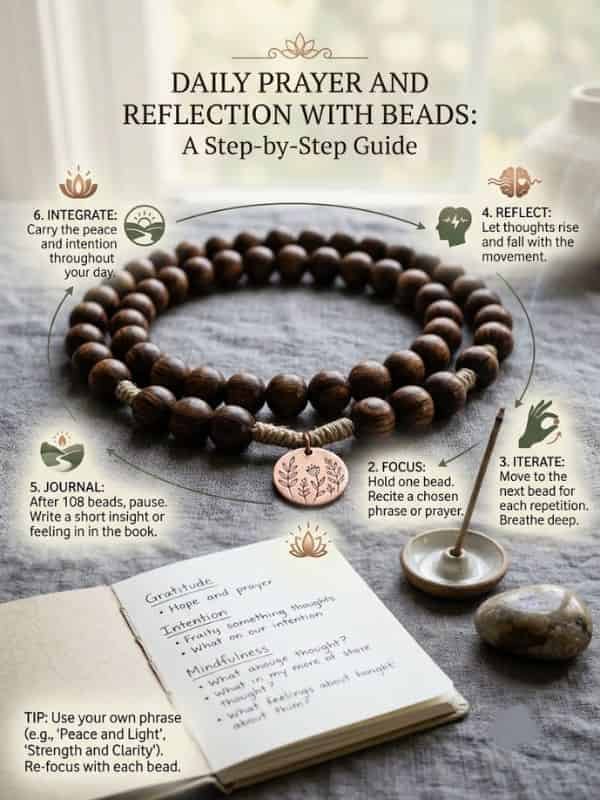
A daily habit beats an occasional marathon. Praying with beads at home for even five minutes can anchor your morning or settle your evening. For example, you might pick up the beads right after your coffee and pray one short prayer per bead. Also, try pairing the beads with a Psalm, saying one verse slowly on each bead and letting Scripture shape your thoughts. Building a consistent prayer habit takes weeks, so be kind to yourself on the slow days.
God of every morning, I give you this day before it starts.
Guard my words and steady my choices.
Where I’m tempted to hurry, teach me to stop.
Where I feel unprepared, remind me you go ahead of me.
Let my work, my rest, and my conversations honor you.
I trust you with the hours I can’t see yet.
Amen.
The Meaning and Spiritual Benefits of Praying with Beads
Behind the beads sits a lot of meaning. Each bead acts as a reminder to pray, and the full strand represents a complete cycle of devotion. Many people find that prayers help them focus their minds, build spiritual discipline, and grow in gratitude. The slow repetition also brings peace and stillness, which is rare in a noisy world. Over time, this mindful pace can feed real spiritual renewal.
God of peace, settle my restless thoughts.
I’m tired of carrying so many worries at once.
Let this quiet rhythm loosen their grip on me.
Replace my noise with your steady presence.
Teach me gratitude for what I already hold.
Renew me gently, one slow breath at a time.
Amen.
Common Mistakes to Avoid When Using Prayer Beads
Everyone stumbles at first, and that’s perfectly fine. Still, a few habits can drain the meaning from the practice. Watch for these:
- Rushing through the beads. Speed turns prayer into a chore.
- Treating the beads like a lucky charm. They’re a tool for focus, not a source of power.
- Skipping an intention. Without one, your mind wanders more easily.
- Ignoring the customs of your tradition. A quick question to a pastor or priest can save confusion.
- Comparing yourself with others. Your pace and style are your own.
- Giving up when your mind drifts. Just return to the next bead and keep going.
God, forgive my wandering mind.
I’ve said these words while thinking about everything else.
Bring me back, gently and as often as I need.
Cure my habit of measuring my prayers against someone else’s.
Let humility matter more than perfection.
Meet me in the clumsy attempts as much as the polished ones.
Amen.
Tips for Beginners Using Prayer Beads
If you’re new, keep things small. A short strand, one familiar prayer, and five quiet minutes are plenty. Many beginners ask whether they can use prayer bead prayers without following a strict tradition, and you can. Choose words that feel sincere, and learn traditional prayers step by step when you’re ready. Most of all, approach the beads with reverence and respect, and let patience do the rest.
God of patience, teach me to begin.
I feel awkward, and I don’t know what I’m doing.
Grow my faith slowly and without pressure.
Help me show up even on days when I feel nothing.
Let honest effort count as worship.
Lead me deeper at the pace that’s right for me.
Amen.
FAQs
What are prayer bead prayers?
They’re short, often repeated prayers you say while moving through a strand of beads, one bead at a time.
How do you get started with prayer bead prayers?
Hold the strand, set an intention, and begin with an opening prayer. Then say one prayer per bead and close with thanks.
Can Christians use prayer bead prayers?
Yes. Catholic, Anglican, and Orthodox traditions all use them, and many other Christians use them as a personal devotional aid.
How are prayer bead prayers different from the Rosary?
The Rosary is one specific set of Catholic prayer beads with a fixed sequence. Other strands can follow different patterns or none at all.
Can you make up your own prayer bead prayers?
Absolutely. Simple, honest words are welcome, and many people mix traditional prayers with their own.
Conclusion
Prayer bead prayers give your hands and your heart something to do together. In this guide, you’ve seen what the beads mean, how to hold them, and how to move through a prayer one bead at a time. You’ve also explored traditional prayers, the order of the Rosary, and other Christian prayer beads like the Anglican strand and the Orthodox prayer rope. Along the way, we looked at common slip-ups and how to avoid them. None of it requires perfection, only a willingness to slow down.
So pick up a strand today and start small. Choose one bead, say one honest prayer, and let it be enough. Whether you follow a traditional sequence or use your own words, prayer bead prayers can become a steady habit that shapes your mornings and calms your evenings. Some days will feel quiet and plain. Other days will surprise you with peace. Either way, keep showing up with patience and sincerity. God meets you in the quiet, and that’s a good place to start.

PrayersGrace is a destination for heartfelt prayers, faith-filled messages, and inspirational words, managed by Olivia Bennett, an SEO content writer with 2 years of experience, focused on creating meaningful content that encourages, comforts, and uplifts readers.