
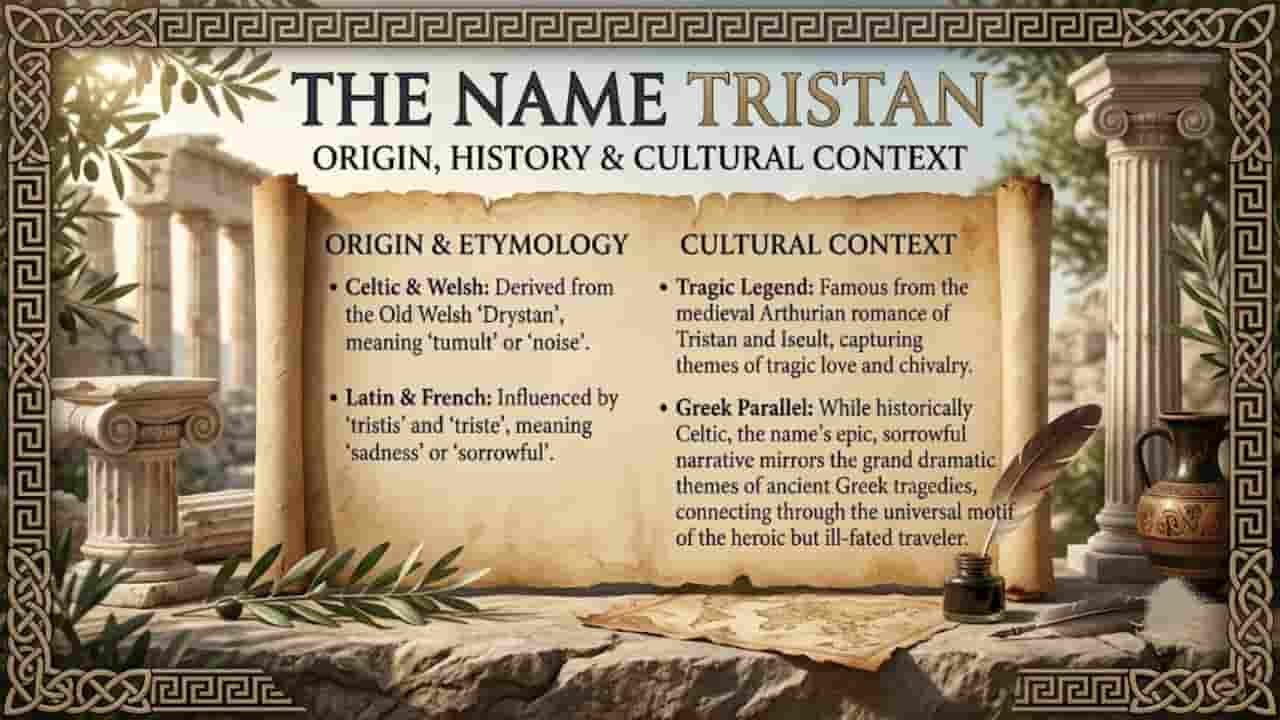
Have you ever come across the name Tristan and wondered what it really means in Greek? If you are searching for Tristan Meaning in Greek, you may find different explanations online, making it difficult to know which information is reliable and what the name actually represents.
In this guide, we will explore the Tristan Meaning in Greek, its possible linguistic background, cultural associations, and how its meaning can be understood today. You will also learn how Greek interpretations compare with the name’s broader history, giving you a clearer and more balanced understanding of Tristan.
Ojos Tristes Meaning
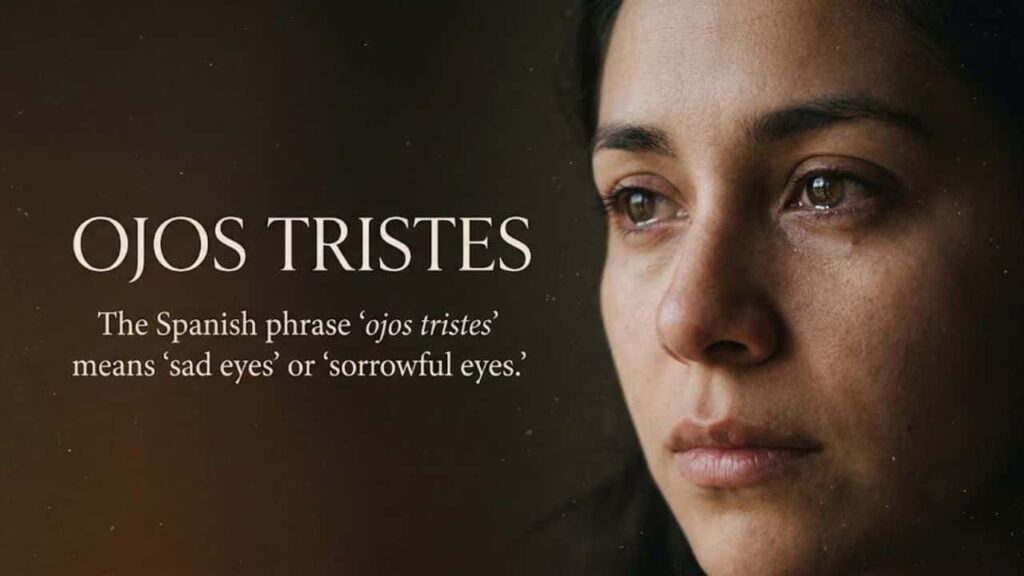
The Spanish phrase “ojos tristes” means “sad eyes” or “sorrowful eyes.” It isn’t the original meaning of Tristan, but the phrase can seem relevant because Tristan has long been associated with sadness, romantic suffering, and tragic love. These associations became especially strong through the famous medieval story of Tristan and Isolde, where deep love exists alongside conflict, separation, and loss.
It’s important not to confuse a poetic association with a name’s historical etymology. Searching for Tristan Meaning in Greek can lead you toward many related words and interpretations, but not every connection represents the actual origin of the name. The sorrowful image surrounding Tristan comes largely from literature and later interpretations rather than from a confirmed Greek translation.
Tristan Name Meaning
The Tristan name’s meaning has several proposed explanations. One major tradition connects the name with older Celtic or Pictish forms such as Drust, Drustan, or Drustanus. Another popular explanation connects Tristan with the Latin word tristis, meaning “sad” or “sorrowful,” partly because medieval French writers associated the name with the French word triste, which also means “sad.”
This creates an interesting mixture of history and storytelling. The Tristan Meaning in Greek can therefore be understood through cultural interpretation rather than a confirmed Greek etymology. Depending on the tradition, the name can suggest sorrow, emotional depth, loyalty, courage, and enduring love. Its meaning became especially powerful through literature, where Tristan was portrayed as a brave and loyal figure caught in a tragic love story.
Read More: Tristan Name Meaning Bible: A Faithful and Biblical Insight
Tristan Meaning in Bible
Tristan is not generally recognized as a biblical name, and it does not appear as a standard personal name in the Old Testament or New Testament. Therefore, searching for Tristan meaning in the Bible should not lead to the assumption that the name has a direct Hebrew or biblical definition. Its historical development belongs mainly to European naming traditions and medieval literature.
That doesn’t mean the name has no spiritual significance for Christian families. Ideas connected with Tristan, such as loyalty, endurance, sacrifice, love, and faith through suffering, can be interpreted through Christian themes. However, these are spiritual associations rather than a documented biblical meaning. Calling Tristan a Bible name or claiming a Hebrew origin would therefore be misleading.
Tristan Meaning of the Name
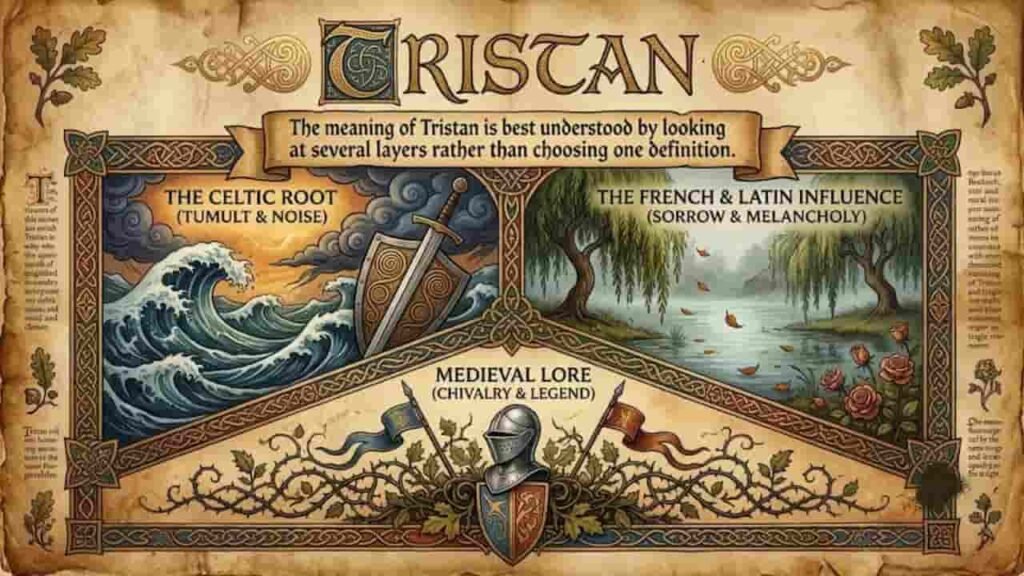
The meaning of Tristan is best understood by looking at several layers rather than choosing one definition. Older forms associated with Drust or Drustan may point toward a Celtic or Pictish background, while the medieval association with triste helped establish the familiar “sorrowful” interpretation. Literature then added another layer by connecting Tristan with heroic love and emotional struggle.
For modern readers, the name can carry a surprisingly rich emotional meaning. The Tristan Meaning in Greek is best viewed through cultural interpretation rather than a confirmed Greek etymology. Tristan may evoke someone who remains loyal during difficult circumstances, loves deeply, and continues with courage despite hardship. The combination of strength and sadness gives the name a distinctive character that has helped it remain recognizable across centuries.
Read More: Tristan Name Meaning in the Bible: Spiritual Significance Explained
Tristan Meaning in Greek
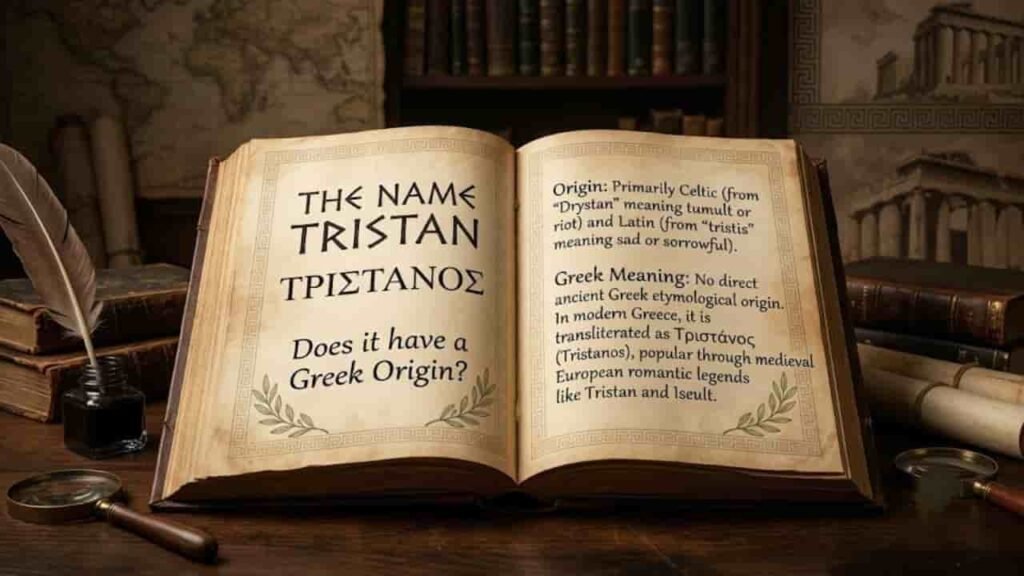
When people search for Tristan Meaning in Greek, they often want to know whether Tristan has a specific Greek definition. The short answer is that Tristan is not generally considered an originally Greek name. Its better-established historical associations are with Celtic, Pictish, Welsh, and medieval European naming traditions.
In Greek, the name can be written through transliteration as Τρίσταν. This represents the name in the Greek alphabet, but writing a foreign name in Greek doesn’t automatically give it a Greek etymology. The Greek-language connection is therefore mainly about pronunciation, spelling, and cultural use. Any sorrowful or heroic meaning attached to Tristan comes from its wider history and literature rather than from a proven ancient Greek root.
The Greek Etymology of Tristan

The idea of a Greek etymology for Tristan requires some care. There are discussions online that attempt to connect Tristan with Greek-looking words or sounds, but similarity between words isn’t enough to prove that one name originated from another language. Historical etymology requires evidence from older forms, documents, sound changes, and linguistic development.
The stronger historical explanation places Tristan within older Celtic and Pictish traditions. Later French and Latin associations helped shape the meaning that many people recognize today. The Tristan Meaning in Greek is therefore better understood through Greek spelling, pronunciation, and cultural usage rather than as proof of an original Greek etymology. Greek can still be useful when studying how Tristan is written and pronounced in the language, but that linguistic connection should not be confused with the original source of the name.
Foundational Linguistic Origins
Older forms such as Drust, Drustan, and Drustanus are important when discussing the historical origin of Tristan. These forms are associated with Celtic or Pictish naming traditions and appear in medieval historical and literary contexts. The exact development from these older forms into Tristan is complex, so different scholars and sources may present slightly different explanations.
The Historical Origin of the Name Tristan
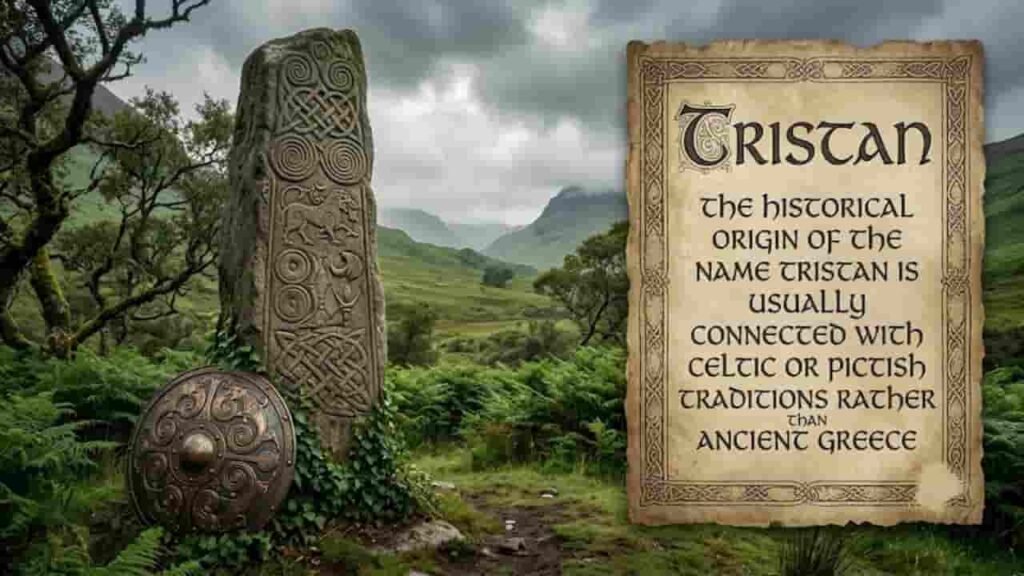
The historical origin of the name Tristan is usually connected with Celtic or Pictish traditions rather than ancient Greece. Older forms resembling Drust and Drustan appear in early medieval contexts, and the name later became widely known through European literature. As the Tristan and Isolde story spread, the name gained an identity that was closely tied to love, loyalty, tragedy, and heroic devotion.
Tristan in Greek Mythology and Ancient Stories
Tristan is not a character from classical Greek mythology. His most famous story belongs to the medieval European tradition of Arthurian legend and centers on Tristan and Isolde. The story developed long after the major works of ancient Greek mythology, so it would be inaccurate to describe Tristan as an ancient Greek hero.
Tristan’s Parallels to Greek Mythology
One useful comparison is Orpheus and Eurydice, a story shaped by love, loss, and an attempt to overcome separation. Another is Paris and Helen, where love becomes connected with conflict and wider consequences. Greek tragedy also frequently explores the tension between personal desire, loyalty, fate, and suffering.
Cultural Significance of Tristan in Greek History
There is no strong basis for treating Tristan as a traditional ancient Greek personal name. Classical Greek naming traditions developed around different linguistic roots and included names connected with mythology, religion, nature, virtues, and family traditions. When considering the Tristan Meaning in Greek, it is better understood through Greek language and modern cultural interpretation rather than ancient Greek naming traditions. Tristan emerged from a different European linguistic environment.
How Ancient Greeks Used the Name?
There is no well-established evidence that ancient Greeks commonly used Tristan as a traditional personal name. Classical Greek records contain thousands of names, but Tristan belongs to a different historical and linguistic tradition.
The Connection Between Tristan and Greek Language
The connection between Tristan and the Greek language is mainly linguistic rather than etymological. When exploring the Tristan Meaning in Greek, it is important to understand that the name is adapted into Greek writing rather than derived from the Greek language. When a foreign name enters Greek writing, speakers adapt its spelling to the Greek alphabet and pronunciation system. Tristan may therefore appear as Τρίσταν, allowing Greek readers to recognize and pronounce the international name.
Linguistic Features
Greek uses its own alphabet, so foreign names require transliteration when written for Greek readers. The form Τρίσταν represents Tristan using Greek letters and generally preserves the recognizable sound of the original name.
Tristan vs. Greek Names: Similarities and Differences
Tristan can sound natural alongside many European and Greek names because it has a simple structure and an internationally familiar pronunciation. However, its linguistic background differs from traditional Greek names. Greek names often have roots in ancient Greek words, mythology, virtues, or religious traditions, while Tristan developed through Celtic and medieval European traditions.
The comparison becomes clearer when we separate sound from origin. The Tristan Meaning in Greek is better understood through its use and interpretation in Greek-speaking contexts rather than a proven Greek etymology. A name may fit naturally into a Greek-speaking community while still having a foreign etymology. This is increasingly common in modern societies where parents encounter names through literature, entertainment, travel, and international culture.
Tristan vs. Greek Names Comparison
| Feature | Tristan | Traditional Greek Names |
| Main historical association | Celtic/Pictish and medieval European | Greek linguistic tradition |
| Ancient Greek origin | Not established | Common among traditional Greek names |
| Greek spelling | Τρίσταν | Uses native Greek forms |
| Literary association | Tristan and Isolde | Greek mythology and literature |
| Common themes | Love, loyalty, sorrow, courage | Varies by individual name |
| Modern use | International | Greek and international |
| Cultural flexibility | High | Depends on the name |
This comparison shows why the Tristan Greek name meaning should be discussed carefully. Tristan can be used by Greek speakers, but its historical origin remains different from that of traditional Greek names.
Modern Usage of Tristan in Greek-Speaking Countries
Modern naming practices are more international than they were in the past. Parents in Greek-speaking communities may encounter names through European literature, films, music, education, travel, or international social connections. Tristan can therefore appear as an international choice even though it isn’t a traditional Greek-origin name.
Why Parents Choose Tristan: Greek Heritage Perspective?
Parents choose names for many reasons, and historical origin is only one factor. A family with Greek heritage might appreciate Tristan because it sounds distinctive, works across several languages, and carries strong literary associations. Others may simply like the combination of softness and strength in the name.
For some parents, the story behind Tristan can also add emotional meaning. The character is associated with loyalty, courage, romantic devotion, and endurance. Even though those qualities aren’t an ancient Greek definition, they can still inspire a meaningful interpretation for a modern family.
Key Reasons Greek Parents Choose Tristan
- It has an international and recognizable sound.
- The name works well across several European languages.
- Tristan has a strong literary history.
- Its story is associated with loyalty and enduring love.
- The name feels distinctive without being difficult to pronounce.
- It can fit comfortably into multicultural families.
- Its historical associations give it emotional depth.
- Parents may appreciate its connection with medieval European literature.
These reasons are cultural and personal rather than proof of an ancient Greek origin. A family’s choice can give a name new significance while its historical etymology remains unchanged.
Famous People Named Tristan with Greek Heritage

The name Tristan has been used by many notable people in modern culture, sports, entertainment, and literature. However, having the first name Tristan doesn’t automatically establish Greek heritage. Claims about a particular person’s Greek ancestry should therefore be based on reliable biographical information rather than assumptions about the name.
This is especially important when researching famous people with Greek heritage. The Tristan Meaning in Greek does not determine a person’s ancestry, as the name is international and can be used across different cultures. A person may have Greek family connections, live in Greece, or work within Greek culture without the name itself being Greek. The safest conclusion is that Tristan is an international name that can belong to people from many different backgrounds, including Greek communities.
Tristan Name Variations Across Greek Regions
- Tristan may appear with slightly different pronunciations when spoken by Greek speakers across various regions.
- Greek transliteration commonly represents Tristan as Τρίσταν while preserving its original pronunciation and identity.
- Regional accents can influence how Greek-speaking families pronounce Tristan in everyday conversations and social settings.
- Some Greek communities may adapt Tristan’s pronunciation naturally while keeping the traditional spelling unchanged.
- Modern Greek speakers generally recognize Tristan as a foreign-origin name rather than a traditional Greek name.
- Cultural exposure, family preferences, and international influences can shape Tristan’s usage across different Greek regions.
The Symbolism Behind Tristan in Greek Culture
If Tristan is interpreted within a Greek cultural setting, its symbolism can draw from the broader story rather than from an ancient Greek definition. The character’s literary tradition emphasizes love, loyalty, bravery, emotional struggle, and sacrifice. These themes can resonate with readers regardless of language or cultural background.
The sorrowful side of Tristan is equally important. His story combines affection with loss and courage with suffering, giving the name a strong emotional dimension. For a modern family, Tristan might symbolize someone who remains loyal during difficult moments and values love even when life becomes complicated.
Is Tristan a Popular Name in Greece Today?
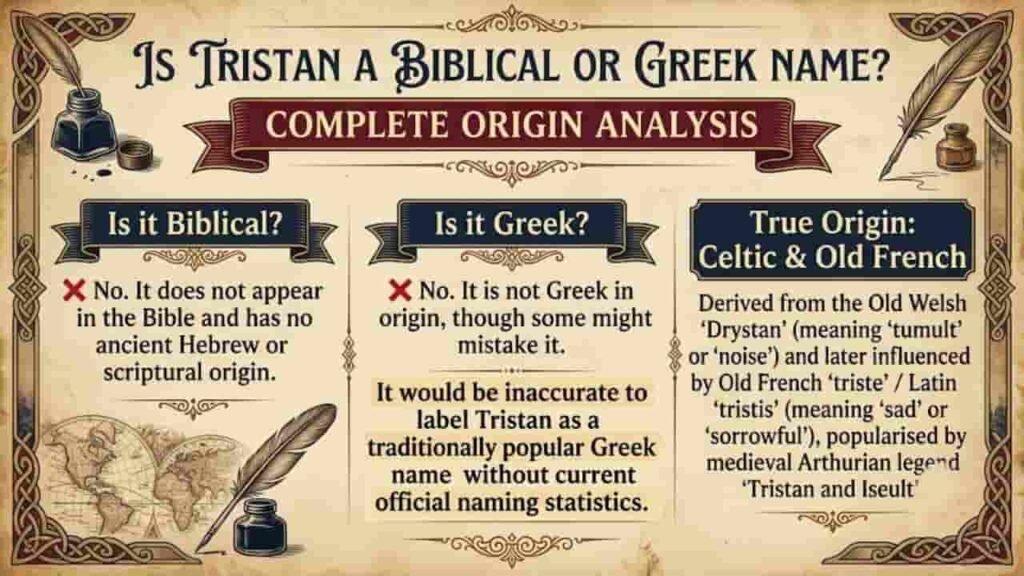
It would be inaccurate to label Tristan as a traditionally popular Greek name without current official naming statistics. Greece has a long history of traditional names, many of which come directly from Greek language, Christian tradition, saints, or ancient Greek culture. Tristan belongs to a different naming stream.
However, international names can become familiar within modern Greek-speaking communities. Tristan may appeal to parents who prefer cosmopolitan names that work beyond one country. Its modern use should therefore be understood as part of wider international naming trends rather than as evidence of an ancient Greek naming tradition.
Tristan’s Role in Greek Literature and Poetry
Tristan’s most important literary identity comes from medieval European literature, especially the tradition surrounding Tristan and Isolde. The story became part of the broader Arthurian world and influenced European poetry, romance, music, and storytelling. It wasn’t originally a work of classical Greek literature.
Greek readers can still encounter Tristan through translations, adaptations, comparative literature, and international cultural exchange. Its themes also fit naturally into discussions of Greek poetry and tragedy because Greek literature has a long tradition of exploring love, fate, suffering, conflict, and sacrifice. The connection is therefore literary and thematic rather than historical.
The Greek Influence on Tristan’s Meaning Over Time
Language can influence how people understand a name even when it isn’t the language of origin. When Tristan is written as Τρίσταν, Greek speakers encounter the name through the sounds and structures of the Greek language. Over time, cultural familiarity can add new associations without changing the name’s historical roots.
This helps explain why Tristan Meaning in Greek can produce different answers depending on the source. Some explanations focus on transliteration, while others discuss the name’s Celtic origin or its association with sorrow through French and Latin traditions. A reliable explanation should keep these layers separate rather than combining them into one unsupported definition.
Is Tristan a Biblical or Greek Name? Complete Origin Analysis?
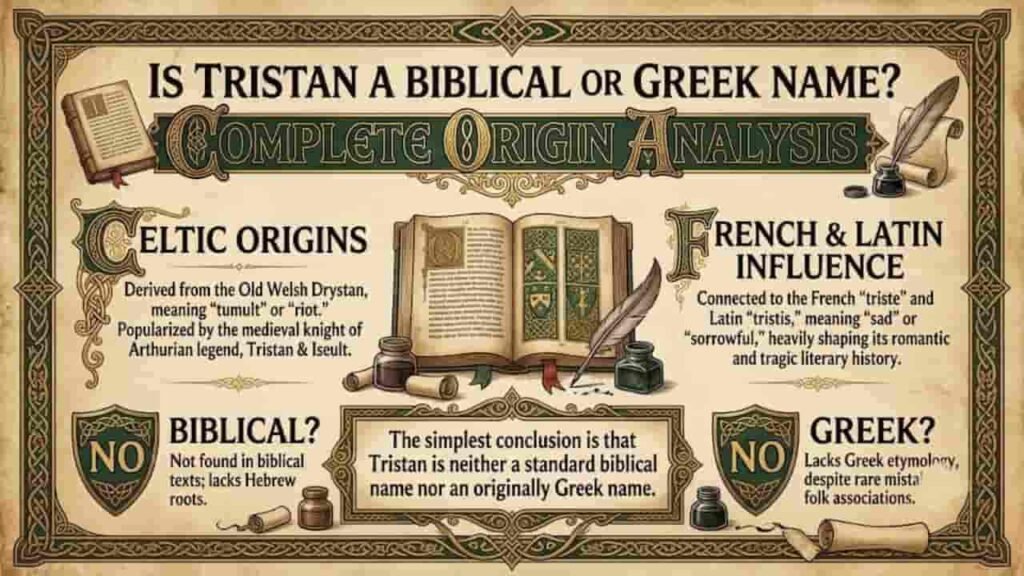
The simplest conclusion is that Tristan is neither a standard biblical name nor an originally Greek name. Its historical background is more closely connected with Celtic or Pictish forms and medieval European literature. The later association with Latin tristis and French triste helped strengthen the idea of sadness, while the Tristan and Isolde story added themes of tragic love, loyalty, and sacrifice.
| Aspect | Tristan’s Origin and Meaning |
| Biblical Origin | Tristan is not a biblical name and does not appear as a traditional biblical name. |
| Greek Origin | Tristan is not generally considered a name of ancient Greek origin. |
| Celtic Connection | The name is strongly associated with Celtic and Pictish naming traditions. |
| Medieval History | Tristan became widely known through medieval European literature, especially the Tristan and Isolde legend. |
| Greek Form | In Greek writing, Tristan can be transliterated as Τρίσταν without changing its original origin. |
| Overall Origin | Tristan is best understood as a Celtic-associated, medieval European name rather than a biblical or Greek name. |
FAQs
What does Tristan mean in Greek?
The Tristan Meaning in Greek has no confirmed ancient Greek definition; the name is mainly linked to Celtic and medieval European traditions.
Is Tristan a Greek name?
The Tristan Meaning in Greek does not indicate Greek origin, as Tristan is historically associated with Celtic, Pictish, and medieval European naming traditions.
Does Tristan have a Greek meaning?
The Tristan Meaning in Greek has no established Greek etymology; similarities to Greek words do not prove an ancient Greek origin.
Is Tristan a Celtic name?
The Tristan Meaning in Greek is distinct from its historical Celtic connections, including older forms such as Drust and Drustan.
How do you pronounce Tristan in Greek?
The Tristan Meaning in Greek can be represented as Τρίσταν, which is a Greek transliteration rather than a translated Greek word.
Conclusion
The Tristan Meaning in Greek is best understood by separating Greek language from the name’s original history. Tristan isn’t generally an ancient Greek or biblical name; its stronger historical associations are Celtic, Pictish, and medieval European. The sorrowful interpretation became especially influential through Latin and French associations and the famous Tristan and Isolde story.
Ultimately, the Tristan Meaning in Greek is best understood through language, cultural interpretation, and the name’s wider European history rather than as a proven ancient Greek origin. While Tristan is not traditionally a Greek or biblical name, its use in Greek-speaking contexts shows how names can gain new cultural associations while retaining their historical identity.

PrayersGrace is a destination for heartfelt prayers, faith-filled messages, and inspirational words, managed by Olivia Bennett, an SEO content writer with 2 years of experience, focused on creating meaningful content that encourages, comforts, and uplifts readers.