
Sometimes, life feels unfair when people hurt you, betray your trust, or try to bring you down. You may feel angry, helpless, or unsure how to pray when facing difficult people or situations. If you are searching for wicked prayers, you may be looking for spiritual guidance, protection, and strength to overcome the negativity in your life.
In this article, you will discover powerful wicked prayers for protection, justice, deliverance, and peace. These prayers will help you seek God’s guidance, stand firm in your faith, and trust Him to handle the battles you cannot fight alone.
What Are Wicked Prayers?
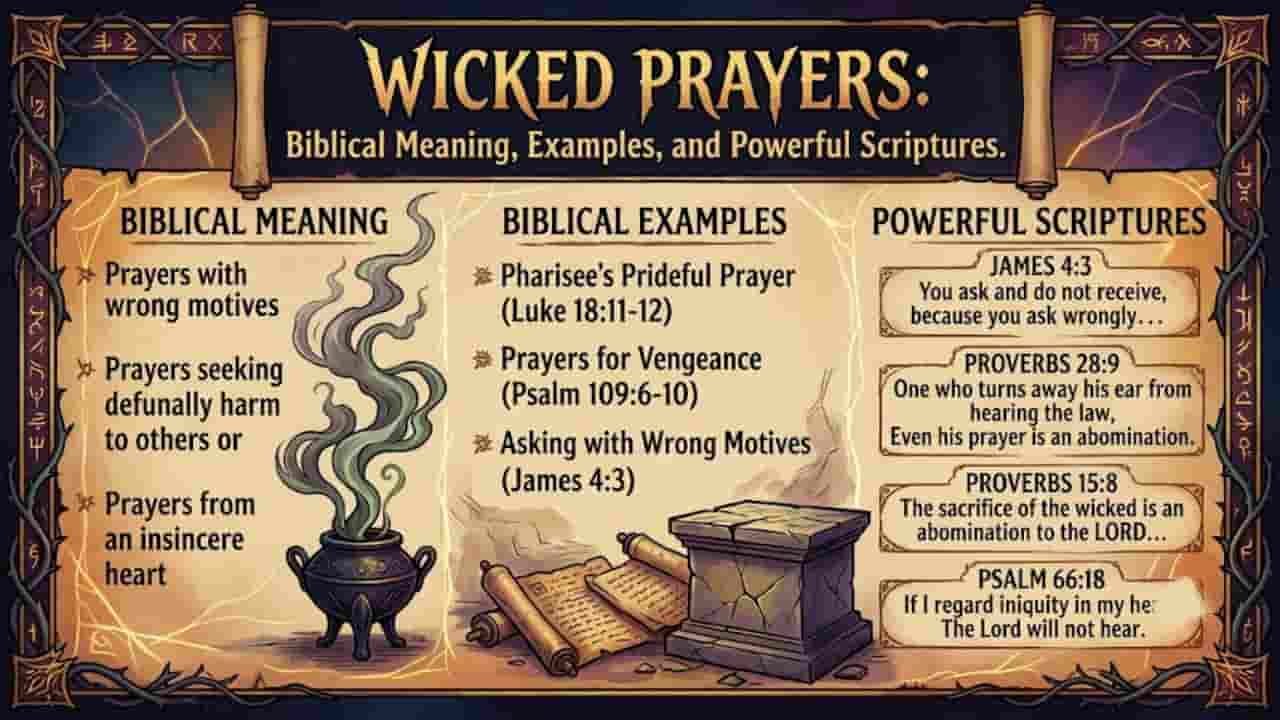
The phrase “wicked prayers” can refer to prayers shaped by harmful intentions, selfish desires, or a wish to see someone suffer. The Bible encourages believers to examine their motives and approach God with humility, honesty, and a desire for what is right. Understanding this distinction helps you seek protection and justice without allowing anger to control your heart.
The Meaning of Wicked Prayers in a Biblical Context
In the Bible, wickedness involves actions, thoughts, and intentions that oppose God’s righteousness. A prayer can become spiritually unhealthy when someone uses it to justify hatred, manipulate others, or pursue revenge rather than seek what is good. Scripture encourages sincere prayer, repentance, and a willingness to follow God’s guidance.
The Difference Between Wicked Intentions and Sincere Prayer
Sincere prayer seeks wisdom, protection, justice, and peace, even when you’re dealing with someone who has hurt you. A prayer driven by revenge focuses on another person’s suffering instead of healing or a fair resolution. You can ask God to stop harmful behavior and hold people accountable while still praying for a heart free from hatred.
What Does the Bible Say About Wicked Prayers?
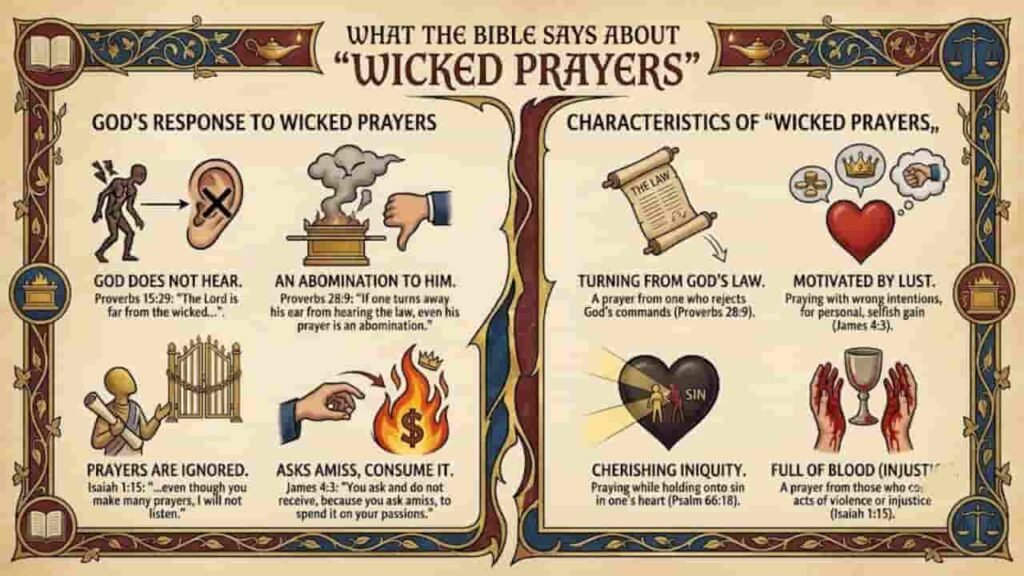
The Bible teaches that God cares about both the words people speak and the intentions behind their requests. Proverbs 15:29 contrasts God’s distance from the wicked with His attention to the prayers of the righteous, while James 4:3 warns against asking with selfish motives. These passages encourage believers to examine their hearts rather than treat prayer as a way to control other people.
Bible Verses About Wicked Intentions and Unrighteous Prayers
Several passages explain why a person’s motives matter when approaching God. Proverbs 15:29 emphasizes the difference between wickedness and righteousness, while 1 Peter 3:12 highlights God’s attention to the righteous and His opposition to evil. Together, these verses encourage honest repentance and a life that reflects compassion, integrity, and faith.
What James 4:3 Teaches About Wrong Motives in Prayer
James 4:3 explains that people may fail to receive what they ask for because their motives are selfish. The passage challenges believers to consider whether their requests reflect God’s will or simply serve personal desires. Before praying about a difficult situation, ask yourself whether you’re seeking wisdom and a just outcome or hoping to satisfy anger.
Read More: Evening Prayers Orthodox Church: Traditional Prayers Before Sleep
Biblical Examples of Wickedness and Evil Intentions
The Bible contains many examples of people whose choices were driven by jealousy, greed, pride, or a desire for power. These stories show how harmful intentions can lead to injustice and suffering. They also remind us that God values truth and righteousness, even when wrongdoing appears to go unchallenged.
How Evil Plans and Unrighteous Desires Appear in Scripture
Cain’s jealousy toward Abel in Genesis 4:3–8 illustrates how unchecked anger can lead to terrible actions. Other biblical accounts show people using lies, manipulation, and power for personal gain. These examples encourage us to recognize harmful behavior, guard our own intentions, and seek God’s wisdom before acting on strong emotions.
What the Bible Teaches About Praying for Personal Revenge
Romans 12:17–21 teaches believers not to repay evil with evil but to overcome evil with good. This doesn’t mean you must ignore abuse, accept injustice, or avoid seeking help. Instead, you can pray for protection, truth, accountability, and the courage to take appropriate action without letting revenge shape your decisions.
Powerful Bible Verses About Wickedness and God’s Protection
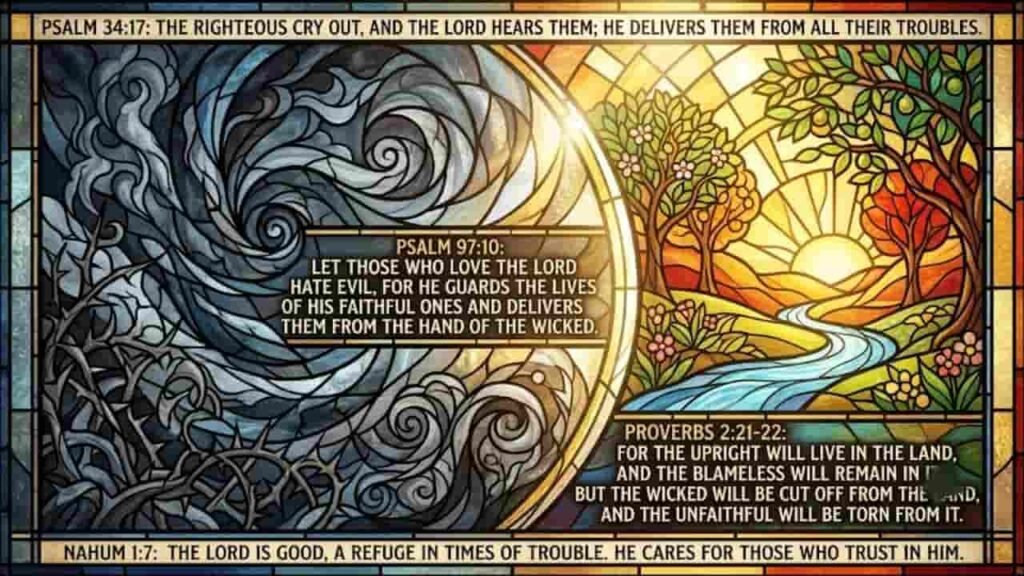
When you’re facing unfair treatment or worrying about someone’s intentions, Scripture can remind you that you don’t have to face every challenge alone. Passages about God’s protection, justice, and strength can help you find courage while making wise decisions. These biblical teachings provide a foundation for prayers against evil plans and harmful intentions.
Psalm 91 and Trusting God for Protection
Psalm 91 emphasizes refuge, safety, and trust in God during times of danger and fear. It encourages believers to seek God’s presence rather than allow anxiety to dominate their thoughts. This psalm isn’t a guarantee that hardship will never happen, but it offers comfort and encourages steadfast faith through uncertainty.
Psalm 140 and Praying Against Evil Plans
Psalm 140 is a prayer for deliverance from violent people and those who plan harm. David asks God for protection against destructive words, malicious intentions, and the actions of those who threaten him. You can use this psalm as a guide when asking for safety, wisdom, and justice in a difficult situation.
Ephesians 6:11 and Standing Firm Against Evil
Ephesians 6:11 encourages Christians to put on the full armor of God so they can stand against the schemes of the devil. The passage uses spiritual armor to describe the strength believers need to resist temptation and remain faithful. It reminds you to respond to wrongdoing with truth, righteousness, faith, and wisdom rather than hatred.
Read More: 15 Powerful Prayers for Men for Strength, Wisdom, and Protection
Prayers for Protection From Evil Intentions

When someone’s behavior makes you feel unsafe, anxious, or uncertain, prayer can help you find strength and clarity. You can ask God to protect you from harmful actions, reveal what you need to understand, and guide you toward wise decisions. The following prayers focus on safety and spiritual peace rather than wishing harm on anyone.
A Prayer for Protection Against Evil Plans
God, please watch over me and protect me from harmful intentions. Give me wisdom to recognize danger and courage to make the right decisions. Keep me from fear, confusion, and actions that could bring unnecessary harm. Guide my steps toward safety and surround me with trustworthy people. Help me stand firm in faith when challenges arise. May truth and justice prevail in every difficult situation. Amen.
A Prayer for Wisdom and Spiritual Discernment
God, grant me the wisdom to understand the situations I face. Help me recognize the difference between genuine concerns and fears that cloud my judgment. Teach me to listen carefully, think clearly, and act with patience. Protect my heart from suspicion, pride, and anger. Guide me toward choices that reflect truth and compassion. Let Your wisdom direct my words and actions each day. Amen.
A Prayer for Peace When Facing Wickedness
God, when I feel troubled by another person’s actions, please calm my heart. Replace my fear with courage and my anger with understanding. Help me focus on what I can control instead of worrying about every possibility. Give me strength to establish healthy boundaries and seek support when necessary. Remind me that I don’t need revenge to pursue what is right. Lead me toward peace, hope, and a renewed sense of purpose. Amen.
How to Pray When Facing Wickedness or Injustice

When you face dishonesty, mistreatment, or unfair decisions, it can be tempting to pray out of anger. However, biblical prayer invites you to bring your pain to God while seeking wisdom and a fair outcome. You can speak honestly about what happened, ask for protection, and seek the strength to respond in a way that reflects your faith.
Seeking God’s Justice Without Revenge
Seeking justice means asking for wrongdoing to be addressed fairly and truthfully. It doesn’t require you to wish suffering on the person responsible. You can pray for harmful behavior to stop, for the truth to come to light, and for those in authority to act wisely. If someone threatens or harms you, seeking practical help and setting firm boundaries can also be important steps.
Responding to Evil With Forgiveness and Faith
Forgiveness can help you release the desire to retaliate, but it doesn’t mean pretending that harm never happened. Matthew 5:44 teaches believers to love their enemies and pray for those who persecute them. This can be difficult, especially when the pain is fresh, so begin by asking God for the strength to respond with wisdom rather than anger.
How to Recognize Wrong Motives in Your Own Prayers
Prayer gives you an opportunity to be honest about your feelings and intentions. Sometimes, fear or disappointment can influence what you ask for without you fully realizing it. Instead of judging yourself harshly, use these moments to reflect, seek guidance, and bring your concerns before God with an open heart.
Examining Your Heart and Intentions Before God
Before praying about someone who has hurt you, pause and consider what you genuinely want to happen. Are you asking for safety and accountability, or do you mainly want the other person to suffer? Honest reflection helps you recognize harmful desires and choose a healthier response. You don’t need perfect emotions to pray sincerely; you need a willingness to acknowledge them and seek a better path.
Learning to Pray With Humility, Love, and Sincerity
A sincere prayer doesn’t require impressive words or a flawless heart. Speak honestly about your struggles, admit where you may have acted wrongly, and ask for the strength to make better choices. When anger rises, ask God to help you respond with patience and compassion. Over time, this habit can help you approach difficult relationships with greater maturity and spiritual confidence.
How Biblical Faith Helps You Overcome Fear of Evil

Fear can grow when you feel uncertain about another person’s intentions or worry about what might happen next. Biblical faith encourages you to bring those concerns to God while continuing to make sensible choices. Rather than promising that every problem will disappear, Scripture offers hope, courage, and guidance for navigating difficult circumstances.
Trusting God’s Righteousness During Difficult Times
Psalm 7 presents a plea for God’s righteous judgment, reminding readers that they can bring concerns about injustice before Him. When you feel misunderstood or mistreated, you can ask God to help reveal the truth and guide everyone involved toward a fair outcome. Trusting His righteousness can help you resist the urge to take revenge while still standing up for what is right.
Building a Consistent Prayer Life Through Scripture
A regular prayer routine can help you respond more thoughtfully when life becomes stressful. Set aside a few quiet minutes each day to pray, read a short Bible passage, and reflect on how its message applies to your choices. Psalm 34:14 encourages people to turn away from evil and pursue peace, offering a practical reminder to let your faith influence your everyday actions.
You can begin with a simple routine:
- Morning: Ask God for wisdom, protection, and a peaceful heart.
- During difficult moments: Pause, breathe, and pray before reacting.
- Evening: Reflect on your choices and ask for help where you fell short.
- Throughout the week: Read relevant Psalms and consider how their teachings apply to your situation.
Consistency matters more than the length of your prayers. Even a brief, sincere conversation with God can help you slow down, examine your intentions, and approach the next challenge with greater clarity.
FAQs
What Does the Bible Say About Wickedness?
The Bible emphasizes sincere motives in prayer. Proverbs 15:29 and James 4:3 warn against wickedness and selfish desires, showing why wicked prayers conflict with a heart seeking God’s will.
Can a Prayer Have Evil Intentions?
Yes. A person may pray out of hatred, jealousy, or a desire for revenge. Wicked prayers reflect harmful motives, while biblical teachings encourage examining your heart and seeking God’s guidance.
Which Psalms Can I Read When Facing Wickedness?
Psalm 91 offers comfort about God’s protection, while Psalm 140 focuses on seeking deliverance from harmful people and their plans. These passages can guide those seeking strength against wicked prayers and evil intentions.
How Should Christians Pray Against Evil Intentions?
Pray for protection, wisdom, justice, and courage. When confronting wicked prayers, ask God to stop harmful behavior while helping you avoid hatred, bitterness, and revenge.
How Can I Recognize Wrong Motives in Prayer?
Examine whether your prayers come from faith, humility, and love or from jealousy, anger, and revenge. Understanding the motives behind wicked prayers can encourage you to seek God’s will with a sincere heart.
Conclusion
Facing dishonesty, mistreatment, or fear can leave you searching for answers and spiritual comfort. Understanding wicked prayers through a biblical perspective helps you distinguish between seeking God’s protection and allowing anger to shape your requests. Scripture encourages you to pray sincerely, pursue justice, and trust God’s righteousness even when a situation feels unfair.
As you continue your prayer journey, ask God for wisdom, courage, and peace in difficult moments. Read the Psalms, reflect on biblical teachings, and remember that forgiveness doesn’t mean accepting harmful behavior. You can stand against wrongdoing, seek appropriate help, and protect yourself without wishing harm on others. Let wicked prayers guide your understanding of biblical protection and justice while keeping your heart focused on faith, truth, and what is right.

PrayersGrace is a destination for heartfelt prayers, faith-filled messages, and inspirational words, managed by Olivia Bennett, an SEO content writer with 2 years of experience, focused on creating meaningful content that encourages, comforts, and uplifts readers.