Have you ever sat in a Catholic Mass and felt a little lost when everyone suddenly knew exactly what to say? Maybe you’re new to the faith, returning after years away, or just trying to learn the Catholic Mass prayers and responses so you can feel more connected instead of mumbling along. It’s okay to admit it. Most of us have been there.
This post walks you through the main Catholic Mass prayers and responses in the order they happen, from the opening greeting to the final blessing. You’ll see what to say, when to say it, and a simple note on what each part means. By the end, you’ll be able to join in with confidence
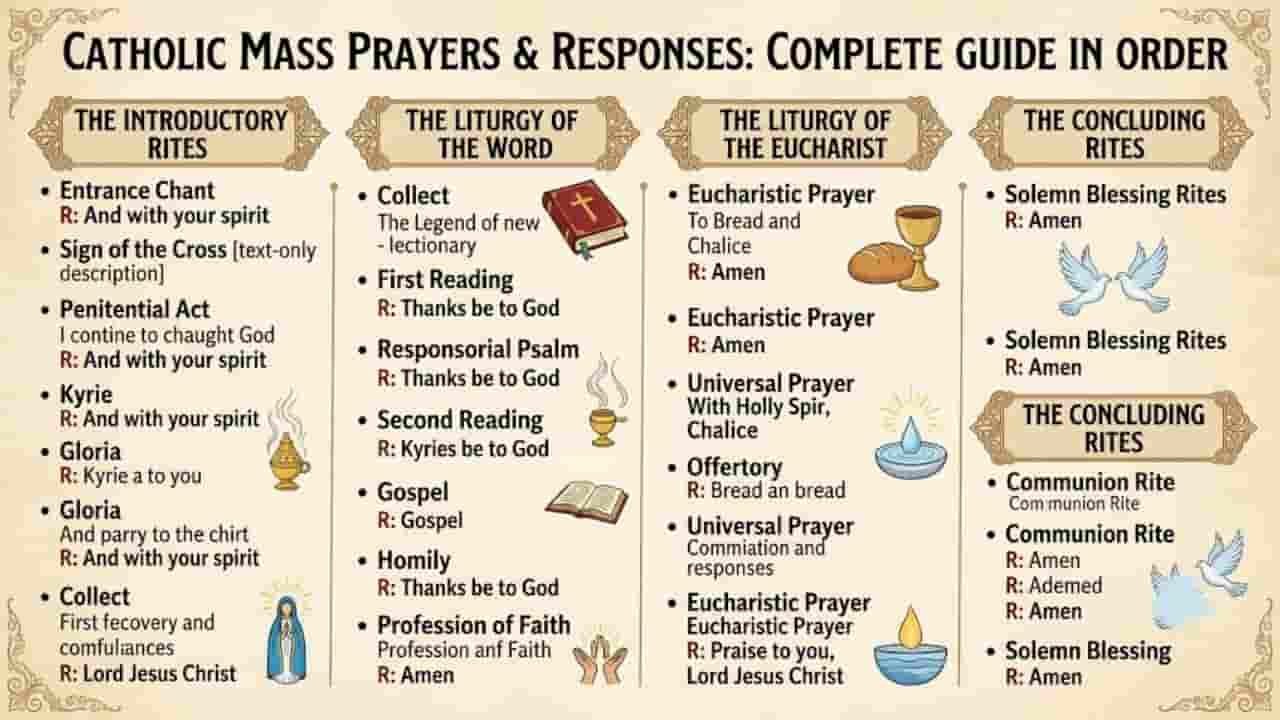
Catholic Mass Prayers and Responses in Order
The Mass follows a steady pattern that hasn’t changed much in centuries. Together, these parts form the structure of the Catholic Mass, laid out in the Roman Missal as the Order of Mass. Think of it as one long conversation between the priest and the people. Here’s a quick map of the five main parts, which gives you a clear overview of Catholic Mass prayers and responses before we go deeper:
- Introductory Rites
- Liturgy of the Word
- Liturgy of the Eucharist
- Communion Rite
- Concluding Rites
Some pieces stay the same every week. Theologians call these the Ordinary of the Mass. Others change with the day, like the readings and the opening prayer. Sunday Mass prayers add extras such as the Gloria and the Creed, while weekday Mass runs shorter. That’s why learning Catholic Mass prayers and responses in order feels easier than memorizing them at random.
Introductory Rites: Opening Prayers and Responses
The Introductory Rites hold the first Catholic Mass prayers and responses you’ll hear. They gather everyone into one community and set the tone for what follows. This is also where many beginners feel most nervous. The good news? Most of these lines are short and repeat all through the Mass.
The rites move in a clear sequence. You’ll hear a greeting, a moment of repentance, the Kyrie, and (on most Sundays) the Gloria. The Collect closes it out. Let’s take them one at a time.
Read More: 2 Prayers After Rosary: Traditional Prayers to Say After the Rosary
Entrance Greeting and Sign of the Cross
You stand as the priest enters, and the choir usually sings an entrance hymn. He then makes the Sign of the Cross, and you join him by tracing a cross on your body as he names the Trinity aloud. You answer “Amen.” Next comes the priest’s greeting, and you’ll hear this exchange again and again: “God be with you.” Your reply is “And with your spirit.”
Penitential Act and Kyrie
The priest invites everyone to pause and remember their sins. Most parishes use the Confiteor, a prayer that begins “I confess to almighty God.” You pray it together, and the priest then offers a short absolution. Answer “Amen.” The Kyrie follows as a simple plea in three lines. The priest or cantor sings “God, have mercy,” and you repeat it. Then comes “Christ, have mercy,” and you repeat that too. The last line returns to “God, have mercy.”
Gloria and Opening Collect
On most Sundays outside Advent and Lent, you’ll sing or say Gloria. It’s an ancient hymn of praise that opens with the angels’ song at Bethlehem: “Glory to God in the highest.” Afterward the priest says “Let us pray” and pauses in silence. He then prays the Collect, which gathers the group’s intentions into one prayer. When he finishes, you answer “Amen.”
Liturgy of the Word: Prayers and Responses
Now you sit and listen. The Liturgy of the Word feeds you with Scripture, and the readings come from the Lectionary. You speak less here, yet your few lines matter. Catholic Mass prayers and responses in this part are mostly short acclamations plus one longer creed.
Picture it as the listening half of a conversation. You take in God’s message first and then answer with faith and petitions. So sitting still and paying attention counts as real participation.
Read More: Prayers For The Souls In Purgatory: Powerful Catholic Prayers
First Reading, Responsorial Psalm, and Second Reading
After each reading, the lecturer says “The word of the God.” You answer “Thanks be to God.” Between the first and second readings comes the Responsorial Psalm. A cantor sings the verses, and you repeat a short refrain. Look for it in the missalette or listen for the cantor to teach it. On Sundays, a second reading follows with the same exchange.
Gospel Acclamation and Gospel Response
Everyone stands and sings “Alleluia.” During Lent, a different short line of praise replaces it. The priest or deacon then says “The God be with you,” and you answer “And with your spirit.” When he announces the Gospel, you say “Glory to you, O God” and trace a small cross on your forehead, lips, and heart. At the end he says “The Gospel of the God,” and you reply with a brief line of praise to Christ.
Profession of Faith and Prayer of the Faithful
After the homily on Sundays, you stand and recite the Nicene Creed. It begins “I believe in one God” and sums up the core beliefs of the Church. The shorter Apostles’ Creed may replace it, especially during Lent and Easter. Then comes the Universal Prayer, also called the Prayer of the Faithful. A reader offers petitions, and you respond with a set line such as “God, hear our prayer.”
Liturgy of the Eucharist: Prayers and Responses
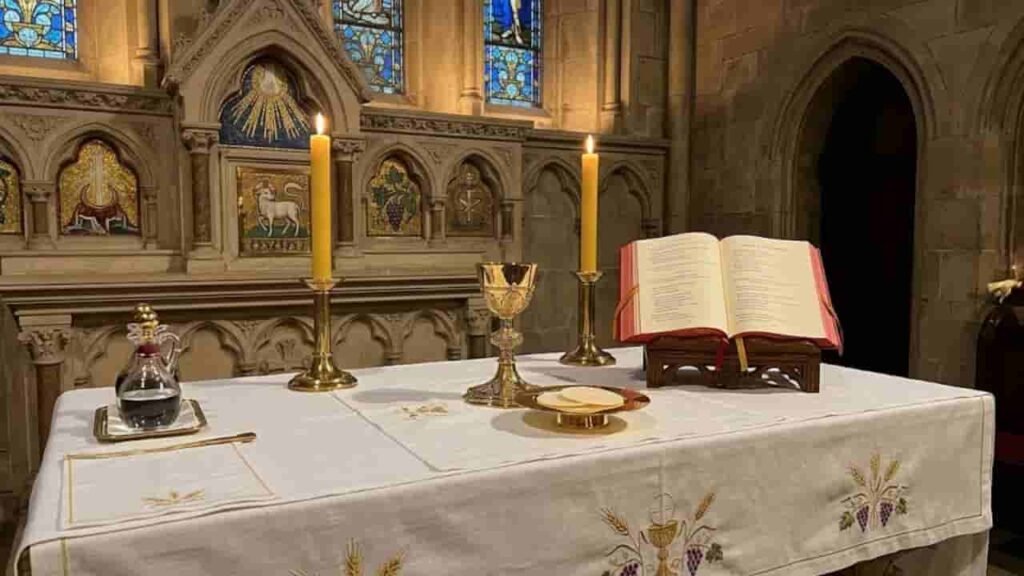
This is the heart of the Mass. According to Catholic teaching, bread and wine become the Body and Blood of Christ here. The Catholic Mass prayers and responses in this section shift from listening to offering.
The priest speaks most of the Eucharistic Prayer. Still, you have key lines to say. Watch for his cues. His tone and posture change, and that tells you when to answer.
Offertory and Prayer Over the Offerings
Parishioners bring the gifts of bread and wine forward while the choir sings. The priest prepares the altar and says a few quiet blessings. Then he turns to you and invites you to pray that the sacrifice will be acceptable to God. You answer, “May God accept the sacrifice at your hands.” He follows with the Prayer over the Offerings, and you say “Amen.”
Eucharistic Prayer and Acclamations
The Eucharistic Prayer opens with a call-and-response known as the Preface dialogue. The priest says “God be with you,” and you answer “And with your spirit.” He says “Lift up your hearts,” and you reply “We lift them up to God.” Then he says “Let us give thanks to God our God,” and you answer “It is right and just.” This is the central prayer of the Mass, so listen closely.
Holy, Holy, Holy and Memorial Acclamation
The Preface ends with the Holy, Holy, Holy, also called the Sanctus. You sing or say it together, starting with “Holy, Holy, Holy God God of hosts.” Later the priest says “The mystery of faith,” and you choose a Memorial Acclamation. One common choice is “We proclaim your Death, O God, and profess your Resurrection until you come again.” The prayer ends with the Great Amen. It’s usually the loudest Amen of the whole Mass.
Communion Rite: Prayers and Responses
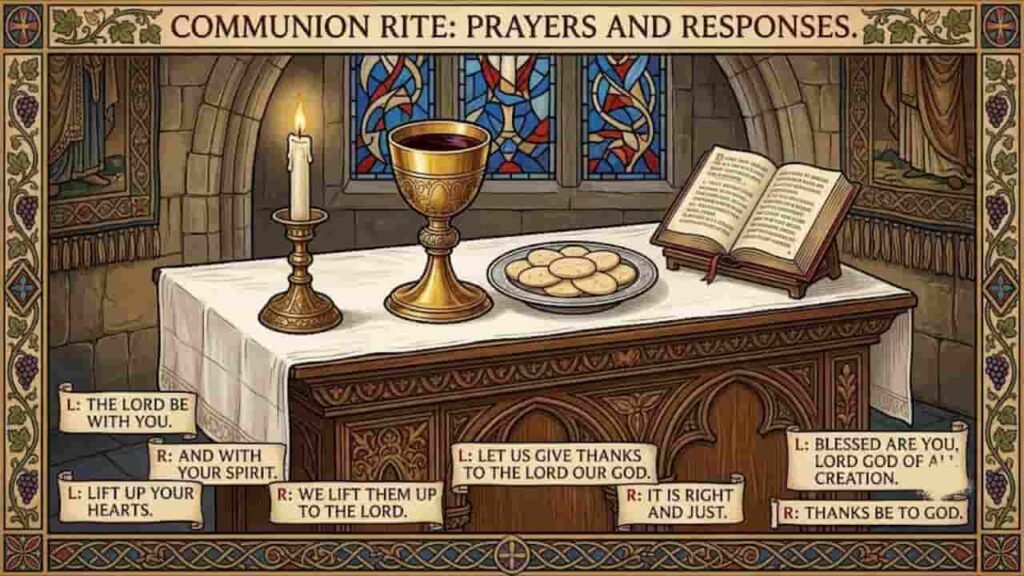
The Communion Rite prepares you to receive Holy Communion. It moves quickly from one prayer to the next. If you learn only a few Catholic Mass prayers and responses, start with these.
This part also covers the moments visitors ask about most. For example, many people wonder what to do at the Sign of Peace and what to say when receiving. The answers are simpler than you’d think.
The God’s Prayer and Sign of Peace
The priest introduces the God’s Prayer, and everyone prays it together. It’s the same prayer Christians say outside Mass. After a short prayer from the priest, you add the closing line: “For the kingdom, the power and the glory are yours, now and for ever.” Then the priest says “The peace of the God be with you always,” and you answer “And with your spirit.” Next, you offer those nearby a handshake and say “Peace be with you.”
Lamb of God and Invitation to Communion
While the priest breaks the bread, you sing or say the Lamb of God: “Lamb of God, you take away the sins of the world, have mercy on us.” You repeat it, and the last line ends with “grant us peace.” The priest then lifts the host and invites you to Communion. You answer, “God, I am not worthy that you should enter under my roof, but only say the word and my soul shall be healed.” At the front, the minister says “The Body of Christ,” and you reply “Amen.”
Prayer After Communion
After receiving, you return to your seat and pray quietly. Many people kneel. The priest then says “Let us pray” and offers the Prayer after Communion, which gives thanks for the gift you’ve just received. You close it with “Amen.” Short announcements often follow before the final rites begin.
Concluding Rites: Final Blessing and Dismissal
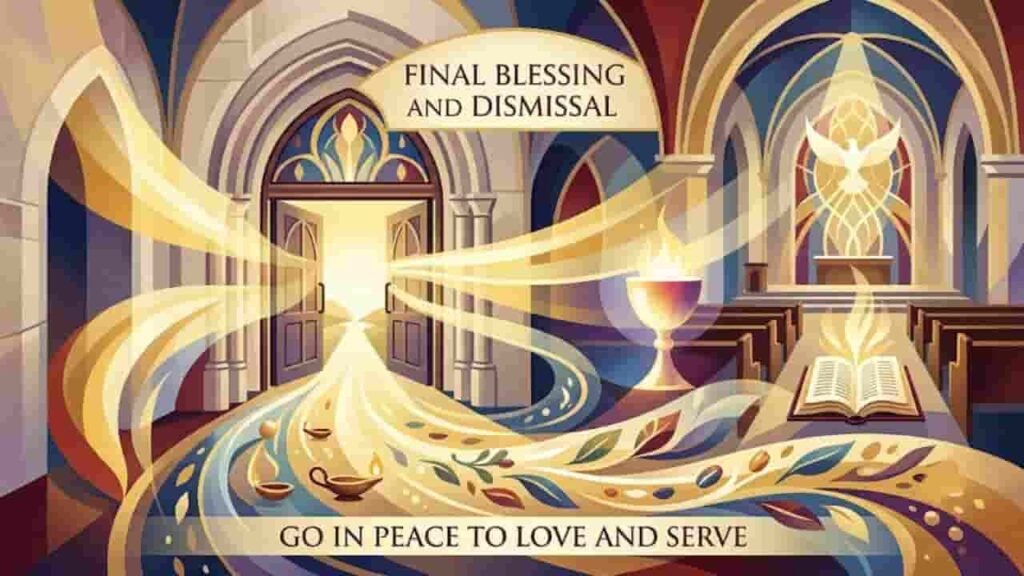
The Concluding Rites are brief. The priest greets you one more time with “The God be with you,” and you answer “And with your spirit.” Then he gives the final blessing, and you respond “Amen.” Many people make the Sign of the Cross again here.
Finally, the priest or deacon sends you out with words like “Go in peace.” You answer “Thanks be to God.” A closing hymn usually follows. In fact, the dismissal is more than an ending. It sends you back into daily life with a purpose.
Common Catholic Mass Responses to Know Before Attending Mass
You don’t need to learn every line to feel comfortable. A handful of core responses covers most of the spoken parts, and learning a few Catholic Mass prayers and responses ahead of time builds confidence fast. Here’s a quick reference:
| When you hear… | You say… |
| “The God be with you.” | “And with your spirit.” |
| “The word of the God.” | “Thanks be to God.” |
| “The Gospel of the God.” | A short line of praise to Christ (printed in the missalette) |
| “Lift up your hearts.” | “We lift them up to the God.” |
| “Let us give thanks to the God our God.” | “It is right and just.” |
| “The Body of Christ.” | “Amen.” |
| “Go in peace.” | “Thanks be to God.” |
Knowing when to respond is the tricky part. Listen for cue phrases like “Let us pray” or “The God be with you.” Also, watch the people around you. Spoken and sung responses use the same words, so music doesn’t change what you say. Even if you miss a line, no one will notice.
Catholic Mass Prayers and Responses for First-Time Attendees
If it’s your first time, relax. Nobody expects you to know everything, and nobody will quiz you afterward. You don’t have to memorize Catholic Mass prayers and responses on day one. Most parishes place a missalette in each pew with the full text, and many diocesan websites offer a printable guide. In 2026, parishes still use the current Roman Missal, so those texts match what you’ll hear.
A few simple habits make a big difference:
- Arrive ten minutes early so you can settle in and read ahead.
- Follow the congregation’s lead when it’s time to sit, stand, or kneel.
- Join in with the short responses first and add longer prayers over time.
- If you’re not Catholic, you can stay in your seat during Communion or ask your parish how to receive a blessing.
Over time, the words become second nature. In the end, that’s how most lifelong Catholics learned them too.
FAQs
What are the prayers and responses at Catholic Mass?
The Catholic Mass prayers and responses include greetings, the Kyrie, the Gloria, the Creed, the Holy, Holy, Holy, the God’s Prayer, and the Lamb of God. You also answer short lines like “And with your spirit” and “Amen.”
What is the correct order of Catholic Mass?
The order is the Introductory Rites, Liturgy of the Word, Liturgy of the Eucharist, Communion Rite, and Concluding Rites.
What is the response to “The God be with you”?
You say “And with your spirit.” It’s one of the most common responses at Mass.
Do you have to memorize Catholic Mass responses?
No. Most parishes provide a missalette with the full text, and you’ll pick up the common lines naturally.
What is the difference between the Nicene Creed and Apostles’ Creed?
The Nicene Creed is longer and is usually recited on Sundays. The Apostles’ Creed is shorter and older, and parishes often use it during Lent and Easter.
Conclusion
The Mass flows from the Introductory Rites to the Liturgy of the Word, then the Liturgy of the Eucharist, the Communion Rite, and the Concluding Rites. Each part has its own set of Catholic Mass prayers and responses, and its own place for you to join in. Nobody expects perfection, so give yourself some grace as you learn.
Bring a missalette next time and follow along at your own pace. Start with the short responses and add more as you feel ready. With regular practice, Catholic Mass prayers and responses will stop feeling like a script and start feeling like your own voice.

PrayersGrace is a destination for heartfelt prayers, faith-filled messages, and inspirational words, managed by Olivia Bennett, an SEO content writer with 2 years of experience, focused on creating meaningful content that encourages, comforts, and uplifts readers.