
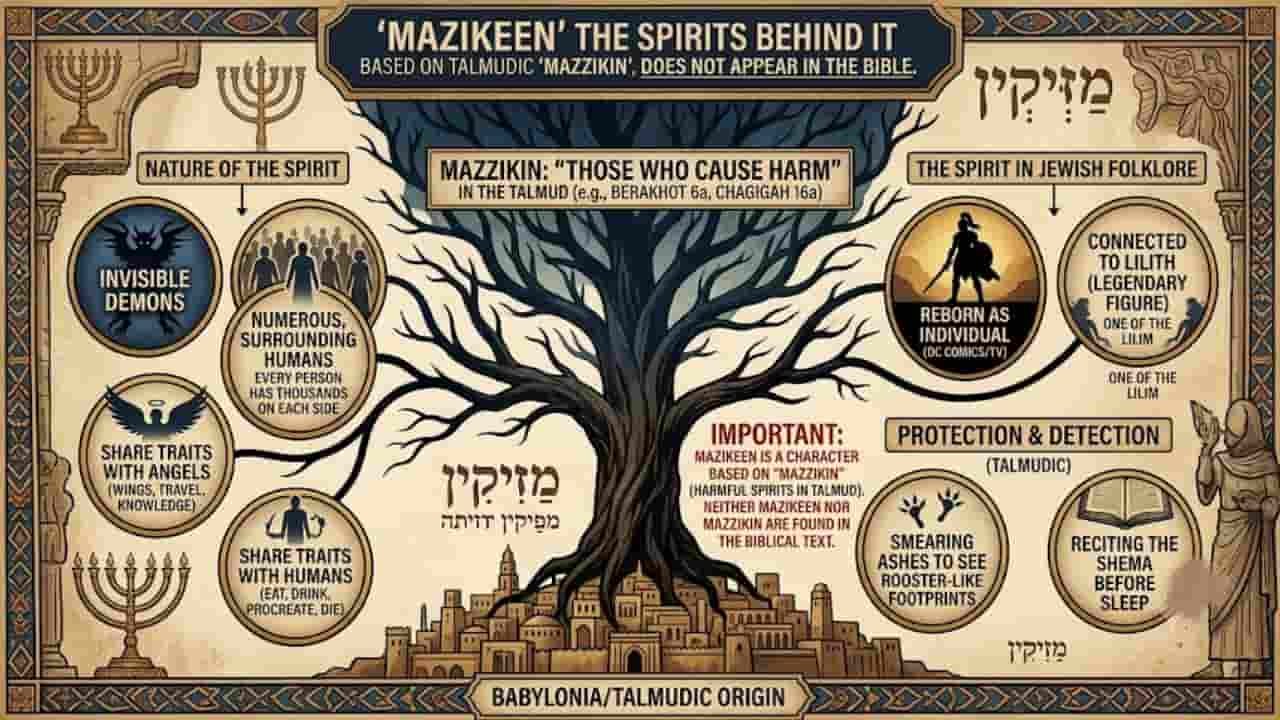
If you’ve come across the name Mazikeen and wondered whether it has any connection to Scripture, you’re not alone. Many people search for Mazikeen in the Bible because the name sounds biblical or spiritual, yet its true origin and meaning can be difficult to understand.
In this article, we’ll explore Mazikeen in the Bible, whether the name actually appears in Scripture, and what its meaning and spiritual associations are. You’ll also learn how Mazikeen is connected to later traditions and popular culture, helping you separate biblical facts from modern interpretations.
Is Mazikeen a Real Demon?
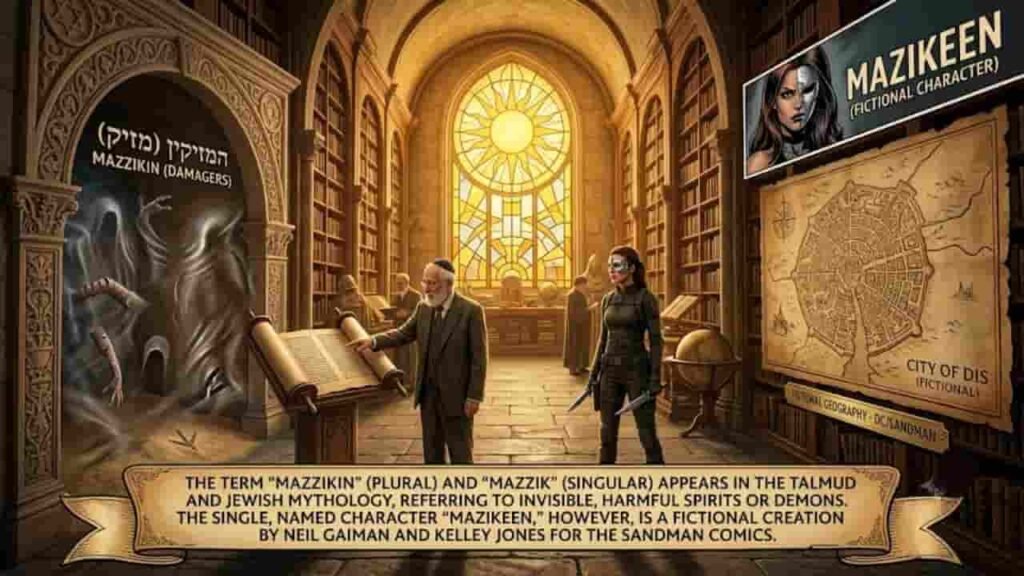
The short answer is that the Bible does not identify a specific demon named Mazikeen. When people ask whether Mazikeen in the Bible is a real demon, they’re often combining several different traditions that developed at different times. The Bible does mention demons, evil spirits, and other supernatural beings, but it doesn’t present Mazikeen as an individual character with a biography, family, or role.
The name is connected more closely with the Jewish concept of mazikin, a term associated with harmful or damaging spirits. Jewish sources and later folklore developed ideas about invisible supernatural beings that could cause trouble or harm. This is different from the modern Mazikeen character, who was created for comic books and later became widely known through television. Understanding that distinction prevents a fictional story from being mistaken for biblical teaching.
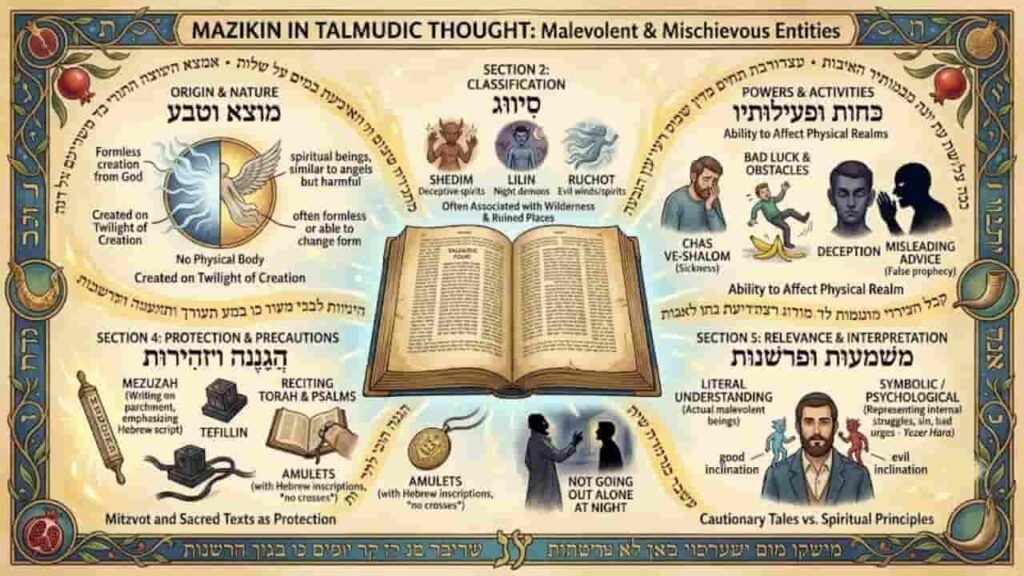
What the Talmud Says About Mazikin
| Point | What the Talmudic Tradition Says | What It Means for Mazikin |
| Term used | Jewish literature uses terms such as mazikin/mazziqin for harmful or damaging supernatural beings. | The term refers to a broader category of spirits, not one specific demon named Mazikeen. |
| Nature of these beings | They are described in Jewish tradition as supernatural beings associated with harm, danger, or unseen disturbances. | This helps explain the historical background behind the modern name Mazikeen. |
| Biblical connection | The Bible does not identify a demon named Mazikeen or provide a detailed doctrine about mazikin. | Readers should not treat later Talmudic traditions as direct biblical teaching. |
| Jewish tradition | Discussions of supernatural beings developed further in Rabbinic Judaism and later Jewish folklore. | The concept belongs to a wider history of Jewish supernatural beliefs and traditions. |
| Historical context | Talmudic discussions reflect the religious and cultural world of ancient Jewish communities. | Understanding the context prevents modern fictional portrayals from being confused with ancient sources. |
| Mazikeen vs. Mazikin | Mazikin is a traditional term, while Mazikeen is a modern fictional character name derived from related terminology. | They are connected by name and concept, but they are not the same entity. |
| Modern interpretation | Later fiction expanded the idea into characters, personalities, powers, and detailed mythology. | The popular character should be understood as an adaptation rather than a figure directly described in the Talmud. |
Read More: Intercessory Prayer for Pastors (With Powerful Scriptures)
The Talmud contains discussions about supernatural beings that are commonly associated with the term mazikin or related forms. These beings belong to the broader world of Jewish folklore and rabbinic thought rather than being a named demon in the Bible. They were sometimes described as invisible or harmful spirits that could affect ordinary human life.
Some traditional passages discuss the existence of spiritual beings alongside angels and humans, while other discussions connect harmful spirits with places, times, or situations that were considered dangerous. These traditions show how ancient Jewish communities thought about the unseen world. However, saying that the Talmud discusses Mazikin is not the same as saying it describes the modern fictional character Mazikeen.
The term appears in Jewish linguistic and religious traditions in forms such as mazikin or mazziqin. The Jewish English Lexicon defines mazikin as invisible demons in Jewish mythology and identifies the word as Aramaic. This helps explain why the modern name sounds similar to an ancient supernatural concept.
Mazikeen Mythology
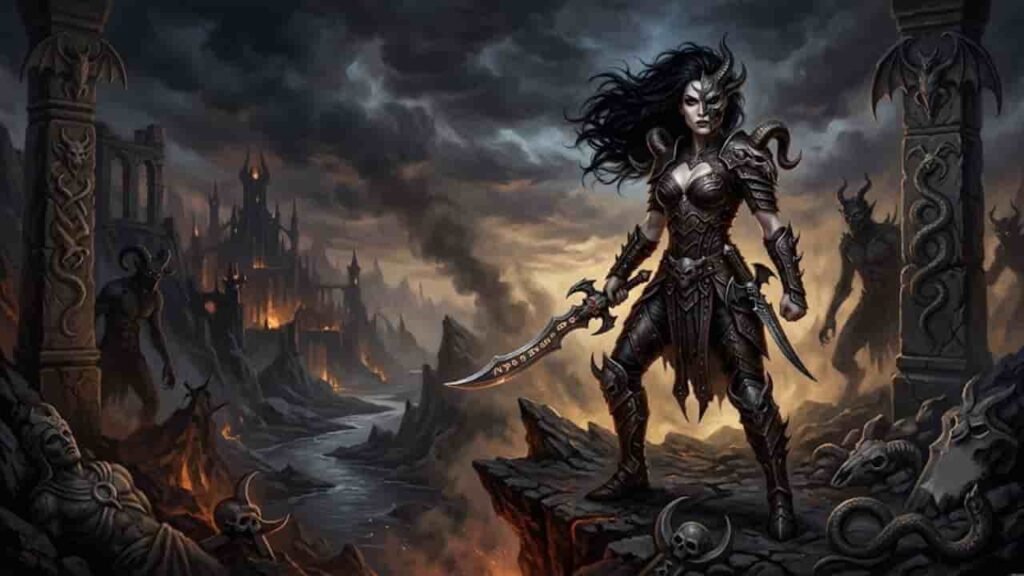
Mazikeen mythology is best understood by separating the old concept of harmful spirits from the character that appeared centuries later in modern fiction. The ancient idea concerns supernatural beings associated with danger, harm, and misfortune. The modern character takes inspiration from this name but develops an entirely different personality, appearance, history, and relationship with other fictional characters.
This distinction matters because searches for Mazikeen in the Bible often mix Jewish mythology with comic-book storytelling. The older traditions don’t describe Maze as a woman working for Lucifer, carrying a particular appearance, or living in Los Angeles. Those elements belong to later creative works. The name has an older cultural background, but the character has a modern fictional identity.
Origins in Jewish Folklore
The roots of Mazikeen mythology are connected with the Jewish concept of mazikin, often understood as harmful spirits or supernatural beings. The term is related to mazik, a word associated with causing damage or harm. Different spellings and transliterations appear because the original languages and later English forms don’t map perfectly onto one another.
Jewish folklore contains many traditions about angels, spirits, demons, and other supernatural entities. These stories developed through different periods and sources, including rabbinic literature and later Jewish traditions. They shouldn’t automatically be treated as part of the Bible itself.
Read More: Owen Meaning in Bible: Explore Its Sacred Message
The Folklore Story
The traditional concept behind mazikin is less like a single monster and more like a category of harmful supernatural beings. They were associated with unseen dangers and could be imagined as causes of everyday misfortune. This makes the original idea quite different from the dramatic demon warrior seen in modern entertainment.
There is also no single ancient story that gives the complete biography many readers now associate with Mazikeen. Her detailed personality, relationships, powers, and appearance come from modern storytelling. In other words, the folklore provides an important background for the name, but it doesn’t provide the complete character.
Understanding the Origin of the Name Mazikeen
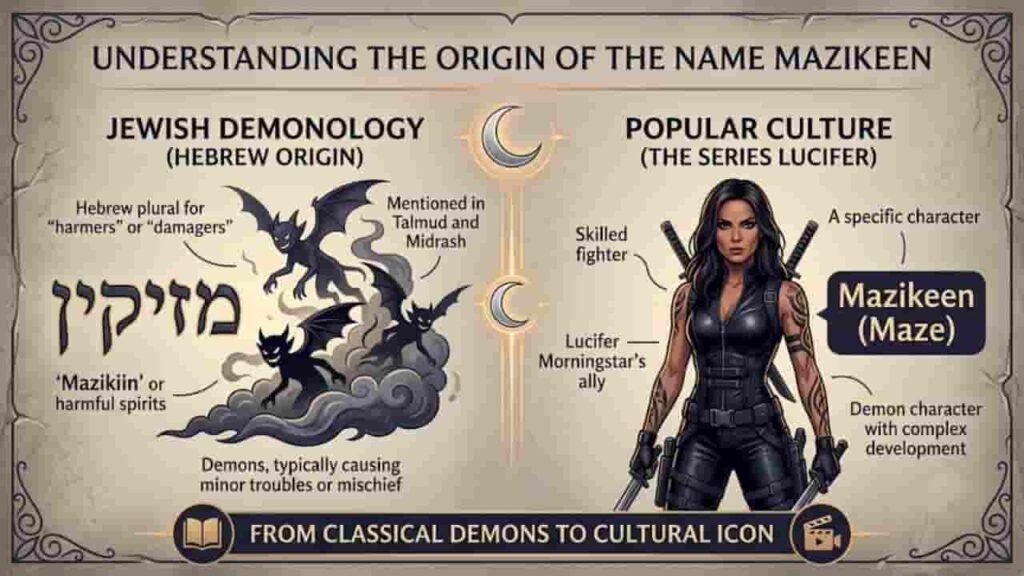
The origin of the name Mazikeen is closely connected with the Hebrew and Aramaic term mazziqin, commonly translated in connection with harmful spirits or “damagers.” The singular form mazziq is related to the idea of something or someone that causes harm. Because transliteration varies, you may encounter spellings such as Mazikin, Mazzikin, Mazziqin, or Mazikeen.
This linguistic background helps explain the meaning of Mazikeen without incorrectly assigning it a biblical definition. The modern name became especially recognizable through the fictional character, while its older linguistic background comes from Jewish tradition. Some modern name sources therefore describe Mazikeen as meaning “harmful spirits,” “damagers,” or “those who harm,” rather than presenting it as a traditional biblical girl’s name.
The Mazikeen in the Bible question becomes easier to answer when you look at the word rather than only the modern character. The Bible does not give Mazikeen a personal name meaning, because Mazikeen isn’t introduced there as a biblical person. The name’s older association is with a broader category of harmful spiritual beings in Jewish tradition.
- The name Mazikeen is linked to mazikin, a Jewish term for harmful or damaging supernatural spirits.
- Its linguistic roots are associated with Hebrew and Jewish Babylonian Aramaic traditions and terminology.
- The related term mazziqin broadly describes beings believed to cause harm or unseen disturbances.
- Mazikeen is a modern fictional name inspired by older Jewish folklore rather than biblical terminology.
- Understanding its etymology helps distinguish ancient Jewish beliefs from later comic and television interpretations.
Cultural and Spiritual Significance of the Name Mazikeen
The cultural significance of Mazikeen comes from the way an ancient supernatural concept was transformed into a recognizable modern character. A word once connected with harmful spirits eventually became associated with a strong fictional woman who has her own goals, relationships, conflicts, and identity. That transformation shows how mythology can change when writers bring old ideas into new stories.
From a spiritual perspective, it’s important not to give the name a meaning that Scripture itself doesn’t provide. The Bible teaches about good and evil, temptation, spiritual conflict, and supernatural beings, but Mazikeen isn’t presented as a biblical spiritual figure. If you’re studying Mazikeen in the Bible, the safest approach is to separate biblical teaching from folklore and entertainment.
The name can still have cultural significance because modern audiences often associate it with themes such as independence, loyalty, identity, redemption, and the struggle between darkness and light. Those themes may be meaningful in storytelling, but they shouldn’t be confused with a biblical interpretation of the name.
- The name reflects ancient Jewish beliefs about harmful spirits and unseen supernatural forces.
- Its cultural significance comes from Jewish folklore rather than direct biblical teaching or Scripture.
- Modern interpretations connect Mazikeen with themes of darkness, identity, independence, and spiritual duality.
- The character represents how ancient supernatural concepts can evolve through modern mythology and popular culture.
- Understanding its origins helps readers separate historical Jewish tradition from fictional spiritual interpretations.
Who Is Mazikeen in Sandman?
Mazikeen first appeared in Neil Gaiman and Kelley Jones’s The Sandman. Her first appearance was in The Sandman Vol. 2 #22, published in the early 1990s, during the “Season of Mists” storyline. In that fictional universe, she is connected with Lucifer and belongs to the Lilim, a group portrayed as the offspring of Lilith.
The Sandman version of Mazikeen is therefore a literary character rather than a biblical figure. Her story includes Hell, Lucifer, Lilith, demons, and other supernatural elements, which can make the character feel religiously familiar. However, these elements are part of a fictional universe that borrows and reshapes ideas from mythology and religious traditions.
Her importance grew beyond The Sandman as the character became connected with the Lucifer comics and later television adaptations. This is one major reason so many people now recognize the name Mazikeen even if they have never encountered the older term mazikin.
What Kind of Demon Is Mazikeen in the Bible?
So, what kind of demon is Mazikeen in the Bible? Strictly speaking, there is no biblical demon named Mazikeen. Scripture does discuss demons and evil spirits, but it doesn’t classify a character with this name or give her the family history found in modern fiction.
This distinction is especially important because the modern character has been described as a demon, warrior, and member of the Lilim. Those descriptions belong to comic books and television rather than the biblical text. The broader Jewish concept of mazikin may help explain the name’s background, but it doesn’t turn Mazikeen into a named biblical demon.
When studying Mazikeen in the Bible, it is therefore better to ask two separate questions: What does the Bible actually say about demons, and where did the modern Mazikeen character come from? Keeping those questions separate makes the subject much easier to understand.
Closest Biblical Parallels
| Biblical Passage | What It Mentions | Relevance to the Topic | Important Distinction |
| Deuteronomy 32:17 | Describes sacrifices offered to demons and beings not regarded as God. | Provides context for supernatural beings in biblical thought. | It does not mention Mazikeen by name. |
| Genesis 6:4 | Mentions the Nephilim and unusual beings connected with the ancient world. | Shows that Scripture contains mysterious supernatural references. | The Nephilim are not identified as Mazikeen or mazikin. |
| Mark 5:9 | Records a demon answering Jesus with the name Legion. | Demonstrates biblical language for multiple demonic entities. | Legion is a separate biblical account and has no direct identity link to Mazikeen. |
| Isaiah 34:14 | Includes unusual creatures and beings within a prophetic description of desolation. | Helps readers explore supernatural imagery in biblical literature. | The passage does not establish a connection with Mazikeen. |
| Revelation 12:4 | Uses symbolic imagery involving the dragon and heavenly conflict. | Adds broader context about spiritual warfare in Scripture. | It does not name or describe Mazikeen. |
These passages offer useful biblical context for supernatural beings, but none identifies Mazikeen as a biblical demon. The name belongs to later Jewish tradition and modern fictional mythology.
Mazikeen of Lilith
The phrase “Mazikeen of the Lilim” comes from the fictional mythology developed around the character. In the Sandman universe, Mazikeen is portrayed as one of the Lilim, the children of Lilith. This gives her a fictional family connection that became central to later stories about her identity and origins.
Lilith herself has a complicated history because different traditions portray her in different ways. She does not appear in the Bible with the full biography that later folklore and popular culture often give her. The famous idea of Lilith as Adam’s first wife belongs primarily to later Jewish folklore and other traditions, not to the Genesis account as it appears in the Bible.
That means the supposed Mazikeen connection to Lilith should be understood as a mythological and fictional connection rather than a biblical family tree. In modern entertainment, this connection gives Maze a powerful backstory and helps explain her fierce personality.
Who Is the Father of Mazikeen?
The answer depends on which fictional version you’re discussing. In DC’s comic mythology, Mazikeen is associated with Lilith as her mother and Ophur as her father. She is portrayed as part of the Lilim and as a powerful figure connected with Lucifer’s realm.
This information is sometimes presented online as though it were ancient religious history. It isn’t. The family relationships of Mazikeen, including her fictional parents and siblings, belong to the comic-book mythology developed by modern writers. The Bible doesn’t identify a woman named Mazikeen as the daughter of Lilith or Ophur.
This is another reason the question Mazikeen in the Bible needs a careful answer. A character can use names and concepts borrowed from older traditions without becoming part of the original religious text.
Her Relationship with Lucifer
Mazikeen and Lucifer have one of the most recognizable relationships in the modern stories featuring her. In the comics, she is closely connected with Lucifer Morningstar and is portrayed as one of his most loyal and capable allies. Her relationship changes across different storylines, but loyalty, conflict, and independence remain important parts of her character.
The television adaptation developed this relationship in its own way. In Lucifer, Mazikeen, usually called Maze, is portrayed by Lesley-Ann Brandt as a demon who follows Lucifer from Hell to Los Angeles. She becomes a bartender, bodyguard, fighter, and eventually someone searching for a life and identity beyond simply serving Lucifer.
Loyal Demon
One of Maze’s defining qualities is loyalty. At the beginning of her modern story, she has spent a long time serving Lucifer and sees him as someone she can trust. Her loyalty isn’t always simple, though. When she feels abandoned, ignored, or betrayed, she can challenge him rather than blindly following his decisions.
This makes her more interesting than a typical villain or servant. Her relationship with Lucifer shows that loyalty can involve disagreement, disappointment, and personal boundaries. In the fictional world, Maze wants to be valued as an individual rather than treated only as Lucifer’s follower.
Strong and Independent Woman
Mazikeen is also written as a fiercely independent character. She is physically powerful, confident, direct, and unwilling to let other people decide her entire future. Her journey often involves discovering what she wants beyond her role as a demon or Lucifer’s companion.
That theme is one reason the character has connected with modern audiences. Her story isn’t simply about supernatural power. It also explores identity, self-worth, independence, and the desire to choose your own path. These themes belong to her fictional characterization rather than being a biblical description.
Complexities of Existence
Maze’s identity becomes complicated because she exists between several worlds. She is a demon who spends significant time among humans, a warrior who wants emotional connection, and a loyal friend who sometimes rebels against the people she loves. That tension gives her character a strong sense of duality.
The idea of living between two worlds also explains why redemption and belonging appear repeatedly in her story. Maze doesn’t simply want to be accepted as a demon. She wants to understand who she is and what makes her life meaningful. Her struggles therefore make her feel more human, even though she is presented as a supernatural character.
Mazikeen Demon Face
The famous Mazikeen demon face is primarily a feature of the fictional character’s visual identity. Her disfigured or partially skeletal appearance became one of the most recognizable elements associated with her comic-book portrayal. It visually reminds the audience that she is not an ordinary human character.
The face also works symbolically. Rather than hiding her supernatural nature completely, the character carries visible evidence of her demon heritage. That creates a contrast between her outward appearance and her emotional desire for friendship, respect, loyalty, and connection.
What Happened to Mazikeen’s Face?
In the fictional comic storyline, Mazikeen’s face was badly disfigured, leaving her with a distinctive demonic appearance. The character was also known for having difficulty speaking clearly because of the injury. Later developments in the comics changed aspects of her appearance, but the original disfigured face remained strongly associated with her identity.
It’s important not to connect this visual design to a biblical description. The Bible doesn’t describe Mazikeen’s face because it doesn’t present her as a biblical character. The demon face comes from the artistic and narrative choices made by the creators of the comics.
The Bigger Picture: Mazikeen’s Cultural Impact
The cultural impact of Mazikeen comes from the unusual way her name connects ancient religious folklore with modern fantasy. The term behind the name has roots in Jewish tradition, while the recognizable character was created for DC-related comics and later adapted for television. This mixture makes the subject fascinating but also easy to misunderstand.
For many readers, Mazikeen in the Bible becomes a search for the boundary between religion and popular culture. The answer is not that the character was secretly described in Scripture. Instead, her name draws from an older supernatural concept, while her personality and story were developed much later by modern creators. The character’s first comic appearance is documented as The Sandman Vol. 2 #22, where she was created by Neil Gaiman and Kelley Jones.
Mazikeen later became even more recognizable through Lucifer, where Lesley-Ann Brandt played Maze. She was also portrayed by Cassie Clare in the television adaptation of The Sandman. These adaptations helped introduce the character to audiences who may never have read the original comics.
Why She Resonates
- Mazikeen resonates through themes of identity, acceptance, independence, and the search for belonging.
- Her character explores self-worth beyond strength, power, loyalty, or service to others.
- She represents emotional struggles that make supernatural characters relatable to modern audiences.
- Her journey highlights loyalty, personal growth, defiance, and the desire for genuine human connection.
- Modern fantasy uses her story to explore identity, freedom, relationships, and complex emotional experiences.
Themes She Embodies
| Theme | How It Appears in Mazikeen’s Fictional Story |
| Identity | Her journey explores who she is beyond her demon heritage, abilities, and supernatural origins. |
| Loyalty | Her relationships often challenge her to balance loyalty toward others with her personal values. |
| Redemption | Her character reflects the possibility of growth, change, and finding a different path. |
| Independence | She frequently demonstrates strength, defiance, and the desire to make her own choices. |
| Duality | Her story explores the tension between darkness and light, demon nature and human experience. |
| Human Connection | Her relationships reveal a deeper desire for acceptance, belonging, trust, and meaningful connection. |
Mazikeen in the Bible should not be confused with these modern fictional themes. Her stories explore identity, loyalty, independence, redemption, and duality through fantasy. These ideas explain her cultural appeal, while biblical and Jewish traditions should be examined separately to maintain historical and religious accuracy.
FAQs
Is Mazikeen in the Bible mentioned as a demon?
No. The Bible does not mention a demon or person by this name. The term is connected to the Jewish concept of mazikin, while the modern character comes from comics and television.
Is Mazikeen in the Bible a real demon?
No. There is no named biblical demon by this identity. The ancient term mazikin refers to harmful supernatural beings in Jewish tradition, while the specific character is fictional.
What does Mazikeen in the Bible mean in Hebrew?
The name is associated with the Hebrew/Aramaic term mazziqin, commonly understood as “damagers,” “harmful spirits,” or “those who harm.” The modern name is closely connected to this older term.
Who is the mother of Mazikeen in the Bible?
In The Sandman and Lucifer mythology, she is portrayed as a daughter of Lilith. This relationship belongs to fictional storytelling and isn’t a biblical genealogy.
What kind of demon is Mazikeen in the Bible?
In modern fiction, she is portrayed as a powerful demon and member of the Lilim. Scripture, however, does not identify a demon specifically by this name.
Conclusion
The easiest way to understand Mazikeen in the Bible is to separate three different things: Scripture, Jewish folklore, and modern fiction. The Bible doesn’t identify Mazikeen as a demon, while Jewish tradition contains the related concept of mazikin, harmful or invisible supernatural beings. The familiar character named Mazikeen was later developed by modern comic-book writers and became widely known through The Sandman and Lucifer.
Understanding Mazikeen in the Bible requires separating biblical Scripture from later Jewish folklore and modern fictional storytelling. While the Bible does not present Mazikeen as a named demon, the related idea of harmful spirits appears in Jewish tradition. Looking at these differences helps you understand the name without confusing mythology, religion, and popular culture.

PrayersGrace is a destination for heartfelt prayers, faith-filled messages, and inspirational words, managed by Olivia Bennett, an SEO content writer with 2 years of experience, focused on creating meaningful content that encourages, comforts, and uplifts readers.