

Have you ever wondered whether the name Tristan has a biblical meaning or any connection to Scripture? If you are searching for its spiritual significance, it can be confusing to separate the name’s historical origin from meanings that are actually found in the Bible. The phrase Tristan Name Meaning Bible A Faithful and Biblical Insight reflects the desire to understand this name from a thoughtful Christian perspective.
In this guide, we will clarify the origin and meaning of Tristan while explaining that the name itself does not appear in the Bible. Along the way, Tristan Name Meaning Bible A Faithful and Biblical Insight will help you explore its possible spiritual significance through biblical values such as faithfulness, courage, love, and strength.
What Does the Name Tristan Mean?

The name Tristan has a long European history and is commonly associated with Celtic and Old French traditions. Its meaning is often connected with ideas such as sorrow, sadness, or a sorrowful person, although scholars have proposed different explanations for its exact origin. The name became especially famous through the medieval legend of Tristan and Isolde, a story remembered for love, loyalty, suffering, and sacrifice. For readers researching Tristan Name Meaning Bible A Faithful and Biblical Insight, this historical background helps separate traditional meaning from biblical interpretation.
Because of this history, Tristan often carries an emotional depth that goes beyond a simple dictionary definition. Its traditional associations can remind people of someone who experiences difficult seasons yet continues to show devotion and inner strength. That interpretation doesn’t make Tristan a biblical name, but it can provide an interesting starting point for reflecting on themes that Scripture discusses deeply.
- Tristan is traditionally associated with sorrow, sadness, and emotional depth in European naming traditions.
- The name has strong connections to medieval European literature, especially the legendary story of Tristan and Isolde.
- Tristan is not a biblical name and does not appear as a personal name in Scripture.
- Its traditional meaning can inspire reflections on resilience, compassion, courage, and strength through difficult seasons.
- The name carries a sense of emotional loyalty, devotion, sacrifice, and enduring love throughout its historical development.
- From a Christian perspective, Tristan can hold spiritual significance without claiming a direct biblical definition.
Read More: Tristan Name Meaning in the Bible: Spiritual Significance Explained
Is Tristan a Biblical Name?

No, Tristan isn’t a biblical name in the direct sense. The name Tristan doesn’t appear as a personal name in the Old Testament or New Testament, and the Bible doesn’t give Tristan a specific definition. Its historical development belongs to European naming traditions rather than Hebrew or Greek biblical naming traditions. This is a key point in understanding Tristan Name Meaning Bible A Faithful and Biblical Insight accurately.
This distinction matters when researching a Christian name meaning. A name doesn’t have to appear in Scripture for Christian parents to appreciate it, but it’s important not to describe a traditional meaning as though it were a biblical teaching. Therefore, the Tristan biblical meaning is best understood as a spiritual interpretation based on biblical themes rather than an official definition found in Scripture.
Tristan Name Meaning Bible: The Spiritual Connection

When people search for Tristan Name Meaning Bible A Faithful and Biblical Insight, they may be looking for more than etymology. They may want to know whether the traditional association with sorrow can point toward something meaningful in Christian faith. While the Bible doesn’t say that Tristan means sorrow, Scripture contains many powerful teachings about sorrow, suffering, perseverance, hope, and God’s presence.
From that perspective, the Tristan spiritual meaning can be explored through the journey from difficulty toward growth. A difficult season may bring grief and tears, yet biblical faith teaches that suffering doesn’t have to be the end of the story. God offers comfort to people who are hurting, strengthens those who face trials, and can use painful experiences to develop compassion, endurance, and deeper faith.
Tristan Meaning in Hebrew
Tristan doesn’t have a Hebrew biblical etymology, so there isn’t an authentic Hebrew definition of Tristan that can be presented as a biblical fact. Searches for the Tristan Hebrew meaning sometimes connect the name with Hebrew words associated with sorrow, but those connections should be treated as thematic comparisons rather than direct translations.
Hebrew Scripture does, however, contain rich vocabulary for grief, sorrow, pain, and distress. Terms such as yagon and tza’ar are associated with experiences of sorrow or distress in Hebrew contexts. These concepts can help explain why people sometimes connect the traditional meaning of Tristan with broader biblical reflections about emotional pain and the human experience. Such comparisons can add context to Tristan Name Meaning Bible A Faithful and Biblical Insight without presenting a false Hebrew definition.
Sorrow in Hebrew Thought
Sorrow is a serious subject throughout the Hebrew Scriptures. The biblical writers don’t pretend that faithful people never experience grief, anguish, tears, or mourning. Instead, many passages show people bringing their deepest emotions honestly before God through lament, prayer, and worship.
This perspective creates an important spiritual lesson. Experiencing sorrow doesn’t automatically indicate a lack of faith. Someone can feel brokenhearted and still trust God. The Bible repeatedly presents God as one who sees suffering and remains present during difficult seasons. That makes sorrow not merely an emotional experience but also an opportunity for deeper prayer, dependence, and spiritual reflection.
Read More: Owen Meaning in Bible: Explore Its Sacred Message
Transformation Through Trials
Trials can change people in ways they never expected. James 1:2–4 teaches that testing can produce perseverance and maturity, while Romans 5:3–4 connects suffering with perseverance, character, and hope. These passages don’t suggest that pain itself is good, but they show how faith can respond to hardship.
This is where the traditional sorrow association of Tristan can offer a thoughtful reflection. A person may enter a difficult season feeling discouraged or uncertain, yet emerge with greater resilience, compassion, and wisdom. Spiritual refinement often happens gradually, as faith is strengthened through struggle and a person’s character develops through difficult experiences. This gives Tristan Name Meaning Bible A Faithful and Biblical Insight a meaningful connection to spiritual growth and perseverance.
- Difficult seasons can strengthen faith and develop deeper spiritual resilience.
- Trials often teach patience, wisdom, courage, and dependence on God.
- Suffering can refine character and reveal God’s purpose in life.
- Pain may become a pathway toward spiritual growth and restoration.
- Faith through trials helps transform hardship into hope, strength, and maturity.
Tristan Meaning in Greek
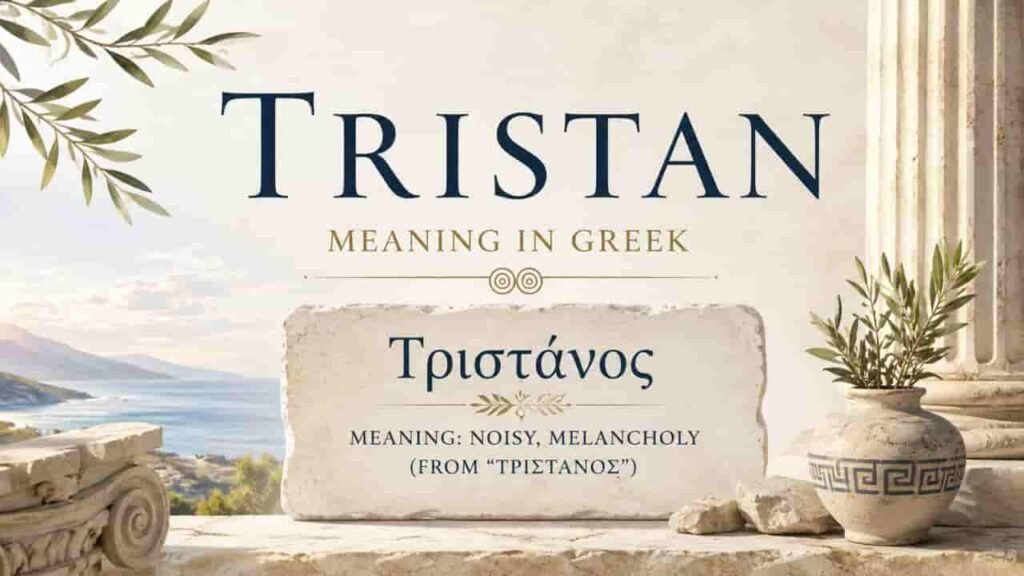
Tristan also doesn’t have a Greek biblical origin. Therefore, the Tristan Greek meaning shouldn’t be presented as though Tristan were a Greek word from the New Testament. However, the Greek New Testament provides useful language for discussing sorrow and tribulation. These ideas provide helpful context for Tristan Name Meaning Bible A Faithful and Biblical Insight without changing the name’s actual origin.
For example, lupē is associated with sorrow or grief, while thlipsis can describe affliction, distress, or tribulation. These Greek biblical concepts help illustrate how Scripture talks about emotional and physical pressure. They don’t translate the name Tristan, but they can provide helpful context when exploring the sorrow-related themes people associate with the name.
The New Testament also presents suffering within a larger story of hope. Jesus acknowledged sorrow, encouraged His followers during tribulation, and promised that sorrow could give way to joy. In this sense, the spiritual discussion surrounding Tristan can move beyond sadness and toward endurance, faith, comfort, and hope.
Biblical Themes Connected to the Name Tristan

Although Tristan isn’t found in Scripture, several biblical themes can be meaningfully compared with its traditional association with sorrow. These themes don’t establish a biblical meaning of Tristan; instead, they show how biblical teaching can provide a deeper framework for understanding sorrow and emotional difficulty. This distinction keeps Tristan Name Meaning Bible A Faithful and Biblical Insight faithful to both historical evidence and biblical teaching.
The Bible gives sorrow a place within the human story while repeatedly pointing toward God’s presence and restoration. The following themes can therefore help readers reflect on what a sorrow-associated name might represent spiritually.
1. God Is Near in Sorrow
One of the most comforting biblical ideas is that God doesn’t abandon people when they hurt. Psalm 34:18 says that the God is near to the brokenhearted and saves those who are crushed in spirit. This message can bring comfort to anyone experiencing grief, disappointment, or emotional distress.
The spiritual lesson is simple: sorrow doesn’t place you outside God’s care. When life feels heavy, honest prayer can become a place where pain is expressed rather than hidden. The traditional sorrowful association of Tristan can therefore serve as a reminder of God’s comfort and presence during difficult times.
2. Pain Produces Growth
James 1:2–4 presents trials as opportunities for perseverance and spiritual maturity. This doesn’t mean Christians should enjoy suffering or ignore genuine pain. Rather, it teaches that difficult experiences can produce qualities that may not develop as deeply during comfortable seasons.
A person facing adversity may discover patience, courage, humility, or resilience along the way. This idea connects naturally with the broader spiritual refinement theme surrounding Tristan. Difficult circumstances can test faith, but they can also help a person develop stronger character and a deeper dependence on God.
3. Compassion Is Born From Suffering
Suffering can make people more sensitive to the pain of others. Someone who has experienced grief may understand another person’s tears in a way that isn’t easily learned from a textbook. This doesn’t mean every painful experience automatically produces compassion, but hardship can open the heart to empathy when it is met with faith and reflection.
Paul describes God as the God of mercies and the God of all comfort in 2 Corinthians 1:3–4. He explains that people who receive God’s comfort can also comfort others. This gives sorrow a meaningful direction: pain can become an opportunity to show kindness, empathy, and compassion.
4. Jesus Himself Wept
John 11:35 records one of the shortest and most emotionally powerful statements in the Bible: Jesus wept. He stood near people grieving Lazarus, and His response shows that tears and sorrow aren’t incompatible with faith.
This matters when thinking about Tristan meaning related to sorrow. Sorrow shouldn’t automatically be treated as weakness. Even Jesus expressed grief. Biblical faith allows room for tears, mourning, and emotional honesty while still holding onto hope in God.
5. Mourning Turns to Dancing
Psalm 30:11 describes God turning mourning into dancing. The verse presents a powerful picture of restoration: a painful season doesn’t necessarily have the final word.
This theme moves the discussion of Tristan beyond sadness. If the name reminds someone of sorrow, its spiritual reflection can also point toward healing, joy, and restoration. Biblical hope doesn’t deny yesterday’s tears; it trusts that God can bring new joy after seasons of mourning.
What Does Tristan Mean in the Bible for Your Life?

So, what does Tristan mean in the Bible when the name itself isn’t found in Scripture? The most accurate answer is that Tristan has no direct biblical definition. However, its traditional association with sorrow can invite reflection on biblical truths about suffering, perseverance, compassion, and hope. This is the most balanced way to approach Tristan Name Meaning Bible A Faithful and Biblical Insight.
For someone who connects deeply with the name, its meaning can become a personal reminder that difficult seasons don’t define an entire life. Faith can grow during hardship, and painful experiences can develop emotional intelligence, empathy, and inner strength. Instead of seeing sorrow as the end of the journey, you can view it as one part of a larger story involving God’s grace, comfort, healing, and restoration.
The Bible contains many examples of people who experienced distress yet continued moving forward. David expressed anguish in the Psalms, Job endured profound suffering, and the early Christians faced persecution and trials. Their stories demonstrate that faith during difficult times isn’t about pretending everything is easy. It’s about continuing to trust God when the path isn’t clear.
This makes the Tristan Name Meaning Bible A Faithful and Biblical Insight perspective especially valuable when approached carefully. It doesn’t create a biblical definition that Scripture never gives. Instead, it connects a traditional name association with authentic biblical themes that speak to real human experiences.
Tristan in Dreams: What Could It Mean?

If you dream about the name Tristan, it’s important not to assume that the Bible gives the dream a fixed meaning. Scripture doesn’t provide a universal interpretation for seeing this particular name in a dream. Dreams can be influenced by memories, relationships, emotions, experiences, and thoughts that occupy the mind. The same careful approach applies when considering Tristan Name Meaning Bible A Faithful and Biblical Insight in relation to dreams.
If Tristan appears during a dream, consider what the name or person represents to you. It might remind you of loyalty, love, sorrow, an unresolved relationship, emotional difficulty, or a particular season of life. Rather than immediately treating the dream as a divine message, reflect on its emotional context and bring your thoughts to God through prayer.
The emotional meaning may also depend on what happened in the dream. A peaceful experience could evoke comfort or reconciliation, while a painful scene might reflect grief or unresolved feelings. Personal circumstances matter, so there isn’t one interpretation that applies to everyone.
For Christians, the healthiest approach is to compare spiritual impressions with Scripture rather than allowing a dream to override biblical teaching. Prayer, wisdom, and careful reflection can help you understand what the experience may mean personally.
- Dreaming of Tristan may symbolize emotional reflection, personal growth, or unresolved feelings.
- The name Tristan in dreams can represent sorrow that leads toward spiritual understanding.
- Seeing Tristan may reflect a difficult season that requires patience, faith, and resilience.
- A Tristan-related dream could symbolize compassion developed through personal struggles and emotional experiences.
- Dreaming about Tristan may encourage you to seek comfort and guidance from God.
- The dream could represent transformation, especially after experiencing pain, grief, or disappointment.
- Tristan appearing in a dream may symbolize hope emerging from a challenging emotional journey.
- Consider the dream’s emotions and circumstances rather than assuming one fixed spiritual meaning.
Is Tristan a Good Name for a Christian Baby?
Yes, Tristan can be a good name for a Christian baby if the parents appreciate its history, sound, and personal significance. Being a Christian doesn’t require parents to choose only names that appear in the Bible. Understanding Tristan Name Meaning Bible A Faithful and Biblical Insight can help parents make that choice with accurate expectations. Many Christian families choose names from different cultures while giving their children biblical values and a strong faith foundation.
Still, parents should understand the name accurately. Tristan isn’t a biblical name, and its traditional sorrow-related association comes from its historical and linguistic background rather than Scripture. If you like the name, you can choose it because of its cultural history or because its themes of loyalty, resilience, and emotional depth resonate with you.
A meaningful Christian name doesn’t have to have a direct Bible reference to carry significance. What matters more is the character, faith, love, and values that a child learns while growing up. A name can open a conversation about those values without being presented as something Scripture explicitly defines.
For parents considering Christian baby names, Tristan may appeal to those who prefer a name with a distinctive European history. If you want a name with a direct biblical origin, however, you may want to compare Tristan with names that are actually found in Scripture.
Other Bible Names That Also Mean Sorrow
When exploring names associated with sorrow, it’s useful to distinguish between actual biblical names and later naming traditions. Several names in Scripture carry meanings or stories connected with grief, pain, hardship, or difficult circumstances.
Mara is one of the clearest examples. Naomi used the name Mara after experiencing profound loss, explaining that she had gone away full but returned empty. The name is therefore strongly connected with bitterness and grief within a biblical narrative.
Jabez is another interesting example. His mother named him Jabez because she had given birth to him in pain. His story appears in 1 Chronicles 4:9–10, where he prays to God for blessing and protection. His story demonstrates that a difficult name association doesn’t have to determine a person’s future.
Ben-Oni is another sorrow-related example. Rachel named her son Ben-Oni during her final moments of life, while Jacob later called him Benjamin. The story shows how a name can reflect a painful moment while the person’s later identity can carry a different meaning and direction.
These examples are different from Tristan because they are actually connected with biblical narratives. Tristan belongs to a different naming tradition. Comparing them can help readers understand why biblical names that mean sorrow shouldn’t automatically be grouped together with European names that have similar emotional associations.
The broader message is encouraging. Scripture contains people whose names or stories were connected with pain, but their lives were never reduced to sorrow alone. Their stories include prayer, transformation, faith, purpose, and God’s continuing presence.
Spiritual Lessons From the Meaning of Tristan

The most valuable lesson from exploring the meaning of Tristan may be that sorrow doesn’t have to define a person’s identity or future. The traditional association of Tristan with sorrow can lead to a thoughtful reflection on what Scripture says about difficult seasons. The Bible acknowledges pain honestly while also pointing toward faith, perseverance, compassion, and hope. These themes provide the deeper perspective behind Tristan Name Meaning Bible A Faithful and Biblical Insight.
When you experience grief or emotional difficulty, you don’t have to hide your feelings from God. Honest prayer can bring sorrow into the open, while deeper prayer can help you seek wisdom and comfort. Psalm 34:18 reminds readers of God’s nearness to the brokenhearted, and 2 Corinthians 1:3–4 highlights His role as the source of comfort.
There is also a lesson about resilience. James 1:2–4 teaches that trials can produce perseverance, while Romans 5:3–4 describes a progression from suffering to perseverance, character, and hope. These passages don’t glorify pain. Instead, they show that faith can respond to pain in a way that produces spiritual growth.
Compassion is another important lesson. When you have experienced sorrow, you may become more aware of the struggles other people carry quietly. Your experience can make you more patient with someone’s tears, more willing to listen, and more ready to offer encouragement. Suffering can become an opportunity to extend the comfort you have received.
Finally, the story of sorrow doesn’t have to end with sorrow. Psalm 30:11 speaks about mourning being turned into dancing, while the New Testament repeatedly points toward hope beyond present suffering. This creates a meaningful spiritual perspective: difficult seasons can be real without being permanent.
So, if you were searching for Tristan Name Meaning Bible A Faithful and Biblical Insight, remember the distinction clearly. Tristan isn’t a name found in the Bible, and Scripture doesn’t assign it a direct biblical definition. Yet its traditional association with sorrow can still inspire meaningful reflection on faith through trials, God’s comfort, compassion, perseverance, restoration, and the hope that can follow difficult seasons.
FAQs
Is Tristan a biblical name?
No. Tristan Name Meaning Bible A Faithful and Biblical Insight confirms that Tristan doesn’t appear as a personal name in the Bible. It comes from European naming traditions rather than biblical Hebrew or Greek.
What does Tristan mean in the Bible?
The Bible doesn’t give Tristan a specific meaning. The Tristan name meaning Bible discussion connects its traditional association with sorrow to biblical themes of suffering, perseverance, comfort, and restoration.
What does Tristan mean spiritually?
The Tristan spiritual meaning can be understood through themes of resilience, compassion, faith during trials, and hope after sorrow. These ideas reflect biblical lessons about finding strength and purpose through difficult seasons.
What does Tristan mean in Hebrew or Greek?
Tristan isn’t a Hebrew or Greek biblical name. The Tristan name meaning Bible interpretation can be compared with Hebrew and Greek words for sorrow, but these words aren’t direct translations of Tristan.
Is Tristan a good name for a Christian baby?
Yes. The Tristan biblical meaning can be viewed through its spiritual themes rather than as a direct biblical definition. Christian parents can choose Tristan based on its history, personal significance, and meaningful connection to faith and resilience.
Conclusion
The Tristan Name Meaning Bible A Faithful and Biblical Insight journey requires a clear distinction between historical meaning and biblical teaching. Tristan isn’t found in Scripture, and the Bible doesn’t define it as a name meaning sorrow. Its sorrow-related association comes from its European history and cultural development, particularly its connection with the medieval Tristan and Isolde tradition.
Still, Tristan Name Meaning Bible A Faithful and Biblical Insight can offer a meaningful spiritual reflection when understood carefully. Biblical themes of sorrow, perseverance, compassion, God’s comfort, healing, and restoration show that difficult seasons don’t have to define your future. If Tristan is meaningful to you, let its traditional association remind you that faith can grow through trials, compassion can emerge through suffering, and hope can remain even when life feels heavy.

PrayersGrace is a destination for heartfelt prayers, faith-filled messages, and inspirational words, managed by Olivia Bennett, an SEO content writer with 2 years of experience, focused on creating meaningful content that encourages, comforts, and uplifts readers.