
If you’ve ever stood through the prayer of the faithful catholic mass and wondered what’s really going on, you’re not alone. The petitions move fast, the responses feel automatic, and it’s easy to zone out without knowing why this moment matters. You might even want to write a few prayers of your own but have no idea where to begin.
This guide explains how the prayer of the faithful catholic mass tradition works, where it fits in the liturgy, and why the Church treats it as such an important part of worship. You’ll also see how prayers of the faithful Catholic parishes are structured, plus simple examples you can follow or adapt. By the end, you’ll feel ready to join in with understanding and a prayerful heart.
What Is the Prayer of the Faithful in Catholic Mass?
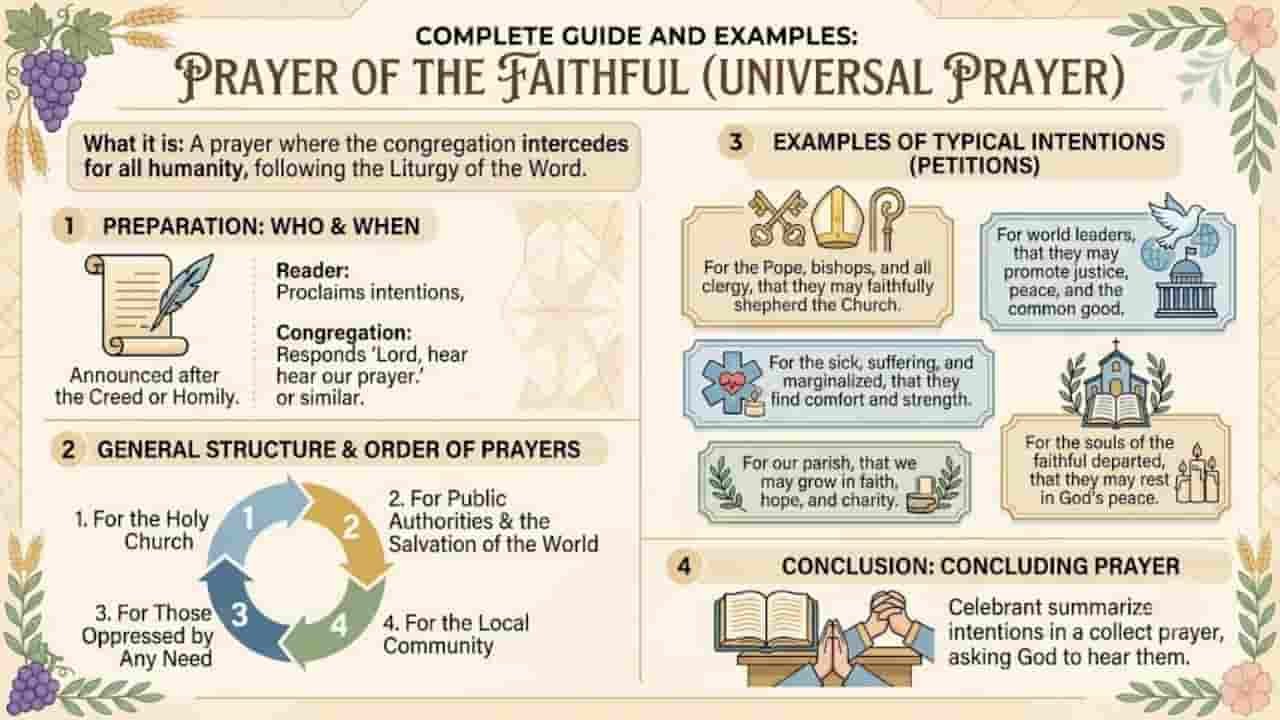
The prayer of the faithful is the part of Mass where the community prays for the needs of the Church and the world. Catholics also call it the Universal Prayer or the General Intercessions. In a typical prayer of the faithful moment, a reader offers short petitions and everyone answers together.
I come to this prayer with a full heart, God.
Thank you for gathering us as one family.
Open my mind to pray beyond my own worries.
Teach me to carry the needs of others as if they were mine.
Let our voices rise together today.
Amen.
When Is the Prayer of the Faithful Said During Mass?
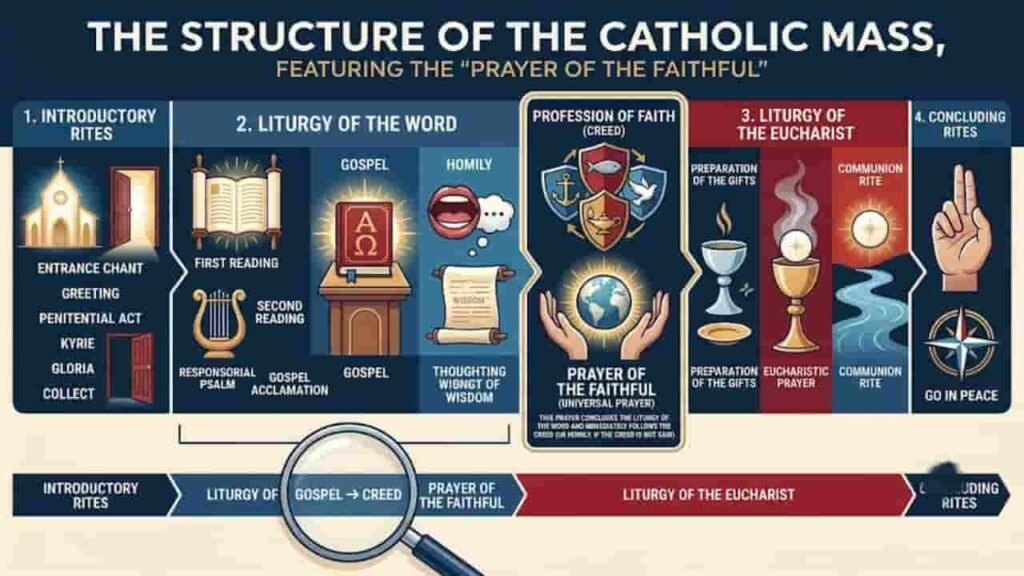
It comes near the end of the Liturgy of the Word. On Sundays and solemnities, you’ll hear it right after the Creed. On weekdays there’s usually no Creed, so it follows the homily. Once the intercessions end, the Liturgy of the Eucharist begins, so the prayer format is easy to spot once you know the order.
You meet us in your Word and in our waiting, God.
As the readings settle in my heart, help me stay present.
Keep my mind from drifting when the petitions begin.
Let me pray each one as if it were my own.
Prepare us for the gifts we’re about to bring to your altar.
Amen.
Read More: Catholic Prayer Before Reading the Bible: 15 Prayers for Understanding
What Is the Purpose of the Prayer of the Faithful?
The purpose is simple. After hearing God’s Word, the people respond by bringing the needs of the world before God. It also lets the lay faithful share in the Church’s call to intercede for others. In the prayer of the faithful Catholic Mass tradition, nobody prays only for themselves.
Merciful God, widen my heart today.
Pull my eyes away from my own list of needs.
Show me the people who are forgotten, hurting, or alone.
Let my prayers for them be honest and steady.
Make me someone who intercedes with love.
Amen.
The Traditional Structure of the Catholic Prayer of the Faithful

The prayer has four simple parts. The priest opens with a brief invitation. A reader then offers the petitions. The people respond and the priest closes with a prayer. Every prayer of celebration follows this same flow, and knowing it helps you follow along or lead with confidence.
Bring order to our prayer today, God.
Let the invitation call us to attention.
Let each petition rise with honest hope.
Let our response come as one voice.
Let the closing prayer gather everything we’ve offered.
Amen.
The Introduction by the Priest
The priest presides from the chair and opens with a short invitation. He doesn’t normally read the petitions himself. Instead, he calls the congregation to pray together and sets a calm, reverent tone, just as the Roman Missal intends.
The Petitions or Universal Intercessions
A deacon, cantor, lector, or another member of the parish reads the petitions from the ambo. Each one names a need, such as the Church, the world, the suffering, or the local community. Good intercessions stay brief, clear, and meaningful.
The Congregation’s Response
After each petition, the congregation answers with a common response. Many parishes use “God, hear our prayer.” Others prefer “God, graciously hear us.” Either way, the response turns one reader’s voice into the whole parish’s prayer.
The Concluding Prayer
Once the last response fades, the priest concludes with a prayer. He gathers all the intentions and presents them to God on behalf of everyone. The people answer “Amen” and the Liturgy of the Eucharist begins.
The Four Main Categories of Catholic Prayer of the Faithful

The General Instruction of the Roman Missal (GIRM) lists four areas for these petitions. They usually move from the universal Church out to the world and finally to your own parish. That pattern keeps the prayers balanced and prevents any one need from crowding out the rest.
Hear me, God, as I pray for your Church.
Guide the Pope, the bishops, and every priest who serves.
Give wisdom to leaders and peace to every nation.
Comfort the sick, the poor, and all who suffer.
Bless my parish and welcome the faithful departed into your light.
Amen.
Read More: Prayer Before Learning: A Prayer for Wisdom and Understanding
Prayers for the Church and Its Leaders
These intentions ask God to guide the Pope, bishops, priests, deacons, and religious. They usually come first in the list. You might also pray for the Church’s unity or for new religious vocations.
Prayers for World Leaders and Peace
Next, the petitions turn outward. You pray for government leaders, for peace among nations, and for the safety of communities. The Church places prayer for the whole world at the heart of worship.
Prayers for Those in Need and Facing Difficulties
This category lifts up people who are sick, poor, lonely, or forgotten. It also covers those facing grief, job loss, or hard decisions. Naming real struggles helps the congregation pray with feeling.
Prayers for the Local Community and the Faithful Departed
The last category brings it home. You pray for your parish, your families, and your neighbors. Then you remember the faithful who have died and ask God to grant them peace.
Examples of the Prayer of the Faithful for Catholic Mass
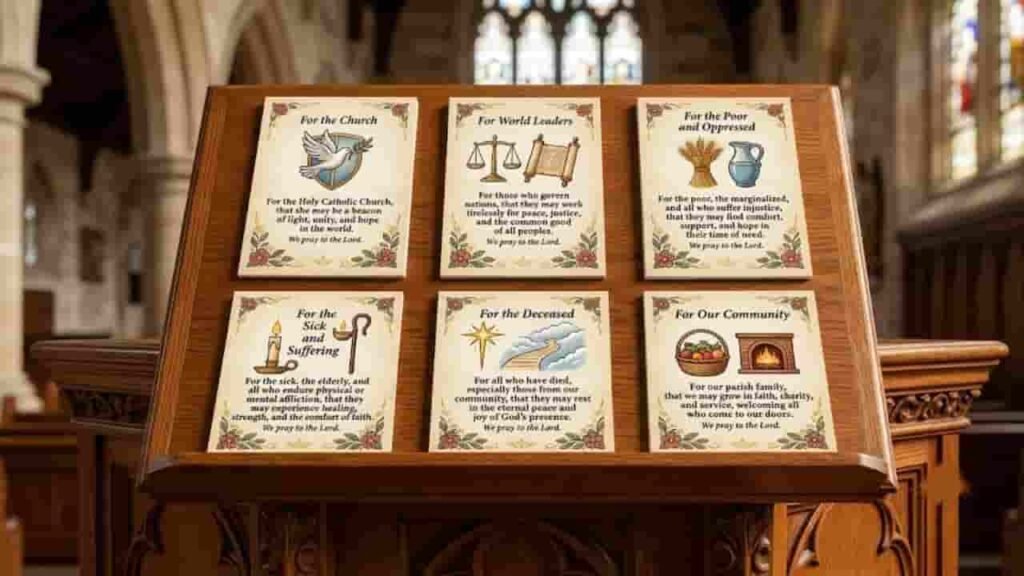
Seeing real wording makes everything click. Below are sample intentions you can adapt for your own parish. Each prayer of the faithful Catholic Mass example uses the same simple pattern: a clear request followed by the people’s response.
Give me the right words, God, when I pray for others.
Keep my intentions short, honest, and kind.
Let each petition name a real need.
Let each response come from a sincere heart.
Use even my simplest prayers to bring comfort.
Amen.
Prayer of the Faithful for Sunday Mass
A Sunday set often runs four to six petitions. For example: “For our Pope, bishops, and priests, that they lead with wisdom, we pray to God.” Another might say: “For the sick and the lonely, that they feel God’s comfort, we pray to God.” The congregation replies, “God, hear our prayer.”
Prayer of the Faithful for Special Occasions and Feast Days
On Christmas, Easter, and other feast days, the petitions reflect the celebration. At Christmas you might pray for families gathering and for those spending the holiday alone. At Easter you could pray for new life and for those entering the Church. Parishes also adapt intentions for wedding Mass, baptism celebrations, and national holidays.
Prayer of the Faithful for Funerals and Memorial Masses
Funeral intercessions center on the person who died and the family left behind. You might pray: “For our departed brother, that God welcomes him into eternal rest, we pray to God.” Other petitions ask for strength and comfort for everyone who grieves.
How to Write the Prayer of the Faithful for Catholic Mass

Writing these intentions isn’t hard. Start with the day’s readings and ask what needs the Church and your community carry right now. Keep each petition to one clear sentence and aim for four to six in total. Following the prayer guidelines also keeps your wording reverent.
| Category | Sample intention |
| The Church | For the Pope, bishops, and priests, that God guides their ministry, we pray to God. |
| The world | For leaders and nations, that peace takes root, we pray to God. |
| Those in need | For the sick, the poor, and the grieving, that they know God’s care, we pray to God. |
| The parish | For our families and our parish, that we grow in love, we pray to God. |
Who Reads the Prayer of the Faithful During Mass?

A deacon, cantor, lector, or another member of the lay faithful usually reads the intentions. The priest doesn’t normally read them because he presides and leads the opening invitation and closing prayer. So yes, laypeople can read the prayer of petitions at the ambo.
What Is the Congregation’s Response to the Prayer of the Faithful?
The congregation answers each petition with a common response. The most familiar is “God, hear our prayer.” Some parishes sing a response or pause for silent prayer. Responding together shows that the prayer of moment belongs to everyone present.
God of every voice, hear the response we speak together.
Let our words carry the hopes of those who can’t be here.
Make our answer more than a habit.
Let it be a true plea from the heart.
Turn our shared words into one song of trust.
Amen.
Guidelines for Leading the Prayer of the Faithful in Church

Leading well takes preparation and calm. Speak slowly, pause after each petition, and wait for the response before moving on. Follow your parish’s liturgical guidelines and keep the tone reverent. Also, remember that the prayer of the faithful Catholic Mass reader serves the congregation, not the spotlight.
What Does the Catholic Church Say About the Prayer of the Faithful?
The GIRM places it within the Liturgy of the Word and sets the order of the intentions. It says the people use their baptismal calling to pray for the salvation of all. The Church encourages short, sober petitions that fit the day’s celebration. These Vatican liturgical instructions shape how the prayer of tradition looks in parishes around the world.
FAQs
What are the General Intercessions in Catholic worship?
They’re the petitions the congregation offers after the readings. The prayer of the faithful catholic mass includes the Church, the world, those in need, and the parish.
At what point in the liturgy do the intercessions take place?
In the prayer of the faithful catholic mass order, they follow the Creed on Sundays or the homily on weekdays. They come right before the Liturgy of the Eucharist.
Who offers the petitions at Mass?
A deacon, lector, cantor, or lay reader offers them. The priest only opens and closes the prayer of the faithful catholic mass intercessions.
How many intentions should a parish include?
There’s no fixed number. Most parishes keep the prayer of the faithful catholic mass petitions to four to six short intentions.
What does the congregation say after each petition?
“God, hear our prayer” is the most common reply in the prayer of the faithful catholic mass tradition. Some parishes use another spoken or sung response.
Conclusion
The prayer of the faithful gives every person in the pews a voice. Once you understand where the prayer of the faithful Catholic Mass moment fits and how its four parts work, the prayers of the faithful Catholic parishes offer each week feel personal. You’re no longer just listening. You’re praying for the Church, the world, your neighbors, and the people you love.
Whether you read the petitions, write them, or simply respond, you’re part of something bigger. Keep the prayer of the faithful catholic mass experience simple, sincere, and brief. Short intentions are easier to follow and they let the whole parish pray as one. So the next time the priest invites the congregation to pray, listen closely and answer with your whole heart. Then take what you’ve learned and offer those intentions at Mass next Sunday.

PrayersGrace is a destination for heartfelt prayers, faith-filled messages, and inspirational words, managed by Olivia Bennett, an SEO content writer with 2 years of experience, focused on creating meaningful content that encourages, comforts, and uplifts readers.